












Mewa: Promoting the Circular Economy Over Hazardous Waste.
 InfoWeb Marketplace · Editorial team
Published on 14 May 2026 · 3 min read
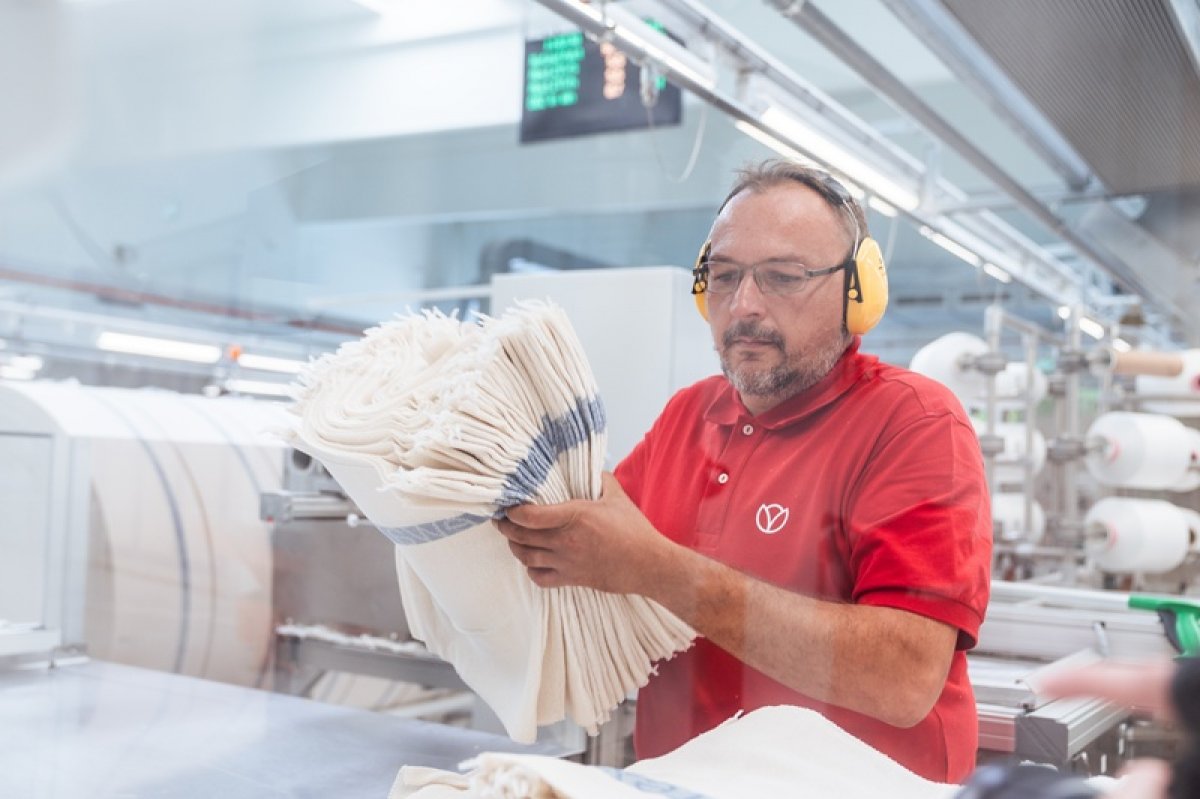
Reusable textile wipers cut waste disposal costs
Faced with rising waste disposal costs, tougher environmental requirements and internal sustainability targets, many industrial and craft businesses are turning to alternatives. Single-use materials used to clean machines and tools are gradually being replaced. Reusable textile solutions, such as industrial wipers, absorbent mats and protective covers for vehicle interiors, significantly reduce industrial waste and, as a result, disposal costs. Field feedback shows that wiper management services can noticeably reduce resource consumption and emissions, while also optimising production processes.
A key factor is the durability of the textiles and their ability to be reused. The reusable wipers offered by the service provider Mewa can, for example, be washed and put back into circulation up to 50 times. Compared with single-use wipers, material consumption is reduced by a factor of five to eight. The Mewa wiper system, deployed in more than 150 000 companies across Europe, prevents several thousand tonnes of waste from being generated every year.
The handling and storage of soiled textiles also deserve particular attention. Wiping materials are often contaminated with oils and lubricants. Their disposal must comply with hazardous substances regulations. Under the Mewa service, the wipers are not considered waste within the meaning of European law. They are collected, washed and put back into circulation by the service provider. Unsecured storage also poses a real risk within the company. With its SaCon safety container, Mewa also addresses this potential hazard.
Waste halved and disposal costs down
The case of the Portuguese company Bloco Gráfico perfectly illustrates the concrete effects of this approach. The printing house of the Porto Editora publishing group has been pursuing a sustainable modernisation of its production for several years. It has been using the wiper service offered by Mewa since 2012. ?The introduction of textile wipers allowed us to immediately reduce contaminated waste by more than 50% and to cut our waste disposal costs by 15%,? says Nuno Oliveira, the purchasing manager. Previously, the company used paper nonwovens to clean machines and printing plates. These single-use materials then had to be treated as hazardous waste. ?With costs exceeding 300 euros per tonne, this item was the main cost related to waste management,? he explains.
The Mewa system optimises production processes
For the printing house Rainer Herrmann GmbH, located in Rhineland-Palatinate, doing without Mewa's reusable wipers is out of the question. ?We put sustainability at the heart of our business,? explains Axel Hermann, the managing director. ?We make sure to produce as few defective print runs as possible, and we use FSC-certified paper and mineral-oil-free inks. Mewa's service fits perfectly into this approach.? Contaminated wipers, soaked with inks, printing oil, thinners, printing gel or drying agents, are processed by Mewa in a sustainable way. ?The closed-loop system works without any intervention from me and remains entirely predictable. What more could you ask for?? concludes Axel Hermann.
The circular economy starts with production
The sustainable orientation of the Mewa service begins with the manufacture of the wipers. The yarns used are made up of 50% recycled materials and the spools are fitted with reusable cardboard sleeves. The cotton lint generated during weaving is not disposed of, but reused as insulation material in the automotive industry. Finally, the industrial wipers are produced locally in the company's spinning mill, located in Immenhausen, in northern Hesse.
Sustainability as a fundamental principle
All processing and logistics operations of the Mewa reusable system are part of a sustainable approach. The energy recovery from the pollutants extracted from the wipers covers up to 80% of the energy required for drying. Technical equipment, such as high-temperature combustion chambers and modern gas treatment systems, also ensures air emissions far below legal standards. Heat recovery in the washing and drying plants, combined with the gradual expansion of photovoltaic energy, finally delivers substantial primary energy savings. At the same time, Mewa is modernising its vehicle fleet with alternative drive systems, in order to move towards carbon-neutral distribution.
The textile service provider also relies on circular principles for its water management. Specific treatment techniques make it possible to halve freshwater use compared with conventional methods. Wastewater reaches a purification level of up to 99,8%. During the washing phase, detergents and surfactants are dosed precisely according to need.