












BASF hydrolysis-resistant polyesters offering easy processing and flowability
 InfoWeb Marketplace · Editorial team
Published on 23 August 2018 · 3 min read
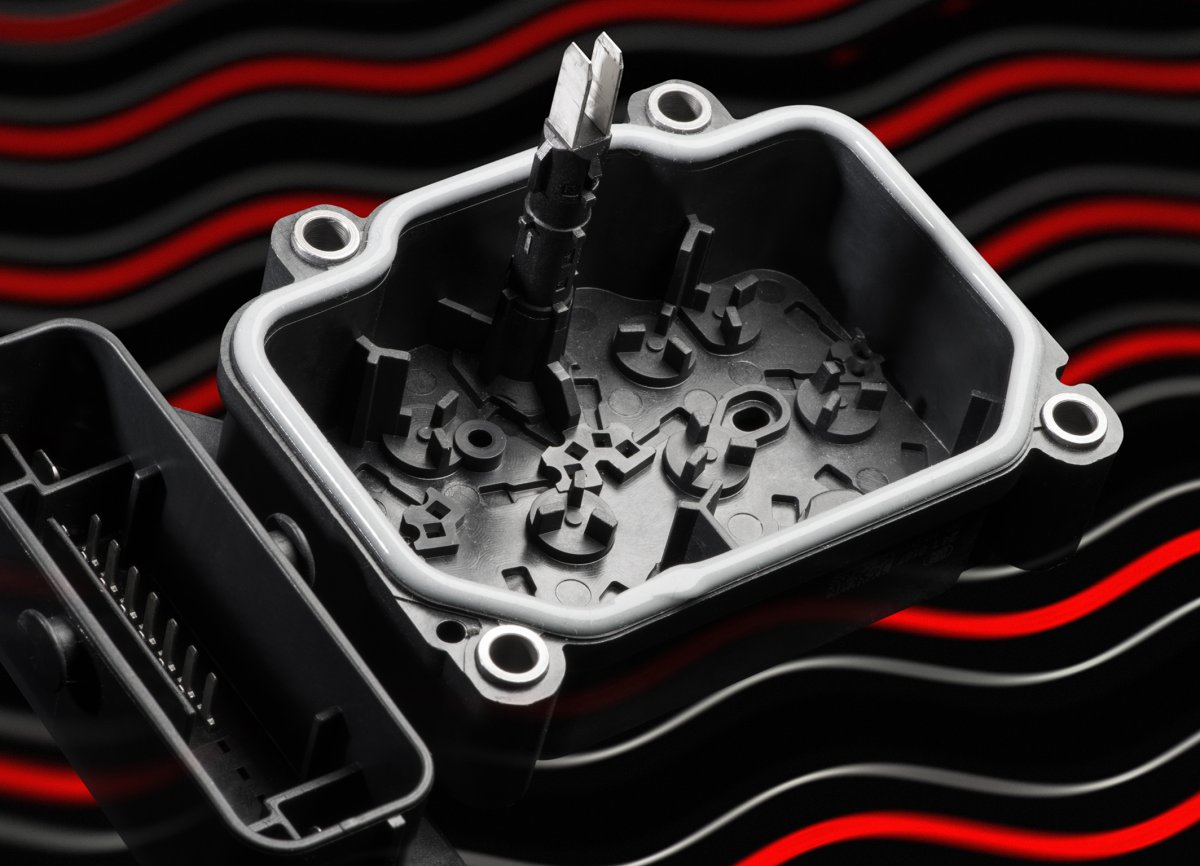
Demand from the automotive industry for ultra-high-performance sensors for electric mobility and autonomous driving is growing strongly. BASF is therefore continuing to develop its range of hydrolysis-resistant thermoplastic polyesters.
The extended Ultradur HR range (HR stands for hydrolysis resistance) includes Ultradur B4330 G6 HR High Speed, a particularly free-flowing, laser-markable grade reinforced with 30% glass fibers, Ultradur B4330 G10 HR, a highly reinforced grade with 50% glass fibers, and Ultradur B4331 G6 HR, the new generation with optimized processing characteristics. Ultradur B4331 G6 HR is now available in a natural (uncolored) version, a laser-markable black version and an orange version for electric vehicle components.
With its Ultradur HR range, BASF offers optimized PBT (PBT = polybutylene terephthalate) materials capable of withstanding extreme conditions of use. They are particularly resistant to aging and offer good operational reliability for automotive components. The HR grades also have improved resistance to alkaline media that promote stress cracking. This also applies to the new grade Ultradur B4331 G6 HR, which features improved melt stability and flowability. In tests, Ultradur B4331 G6 HR shows no increase in viscosity, even at high temperatures and with relatively long residence times – the best prerequisites for easy and stable processing. The material can also be colored orange (RAL 2003) for the production of high-voltage quick connectors for electric vehicles. Thanks to the exceptionally high tracking resistance of PBT, quick connectors can be miniaturized from the design stage while still withstanding the high voltages found in electric vehicles. In the end, a double saving can be achieved: lighter components and lower costs.
The Ultradur 4330 G6 HR range, already on the market in a version reinforced with 30% glass fibers, has been expanded with the arrival of Ultradur B4330 G6 HR High Speed bk15045, a particularly free-flowing, laser-markable grade. It facilitates the production of thin-walled parts and components with a good flow length/wall thickness ratio.
The new Ultradur B4330 G10 HR is filled with 50% glass fibers to enable the manufacture of components that withstand moisture and high temperatures (160°C, short-term exposure up to 180°C) while retaining high rigidity, e.g. steering modules in the charge air duct. In the temperature range from 140°C to 180°C, the material achieves almost the same level of properties as polyphenylene sulfide (PPS), usually used in this type of application.
For certain specific automotive applications, BASF has developed Ultradur B4450 G5 HR, a PBT reinforced with 25% glass fibers that is RoHS-compliant and flame retardant. It can be colored in light shades and laser printed. With low condensation levels in emission tests according to VDA 278, it is intended for applications in the vehicle interior as well as for control unit housings. The latest addition to the range combines hydrolysis resistance and built-in flame retardancy, high tracking resistance and low smoke density. This property profile targets in particular applications in the field of electric mobility, where the safety requirements and voltages encountered are much higher than in vehicles with conventional drive systems.
Since the launch of the HR range, BASF has developed no fewer than a dozen Ultradur grades modified to be hydrolysis resistant, reinforced with 15%, 30% and 50% glass fibers, and which are particularly free-flowing, impact resistant, laser-markable, laser-transparent or flame retardant. The main applications are concentrated essentially in automotive electronics, notably control unit housings, connectors and sensors, but also charging sockets, battery packs and plugs in the high-voltage circuit of electric cars.
