












CE marking for the BMW Group's robotic assistance systems
 InfoWeb Marketplace · Editorial team
Published on 31 January 2019 · 1 min read
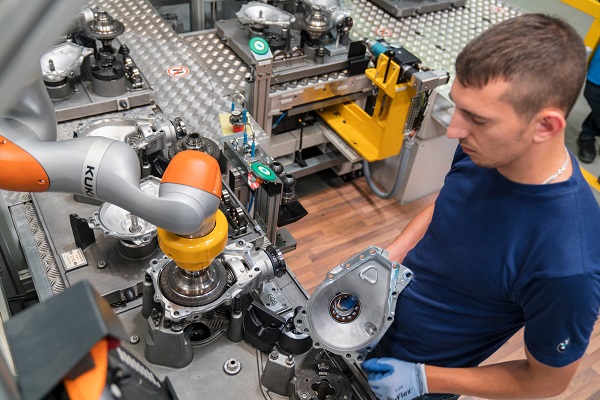
Pilz guarantees HRC applications in automotive manufacturing.
The BMW Group is working with Pilz to ensure safety when working in partnership with assistance robots: the automation specialist carries out the conformity assessment, including the final CE marking. As a result, Pilz ensures safe human/robot collaboration (HRC) at several BMW Group production sites.
In general, workstations pose a particular safety challenge when humans and robots work together without moving guards. In Europe and the United States, the BMW Group trusts Pilz's expertise: the automation specialist carries out the legally required conformity assessments at various BMW Group production sites in Germany, England and the United States: from risk assessment to the CE marking of several applications, including improvement solutions and validation.
Pilz assumes its responsibilities worldwide
As authorized representative, Pilz signs the final declaration of conformity and thus assumes responsibility for the compliance of each application with the requirements of the relevant market. The BMW Group uses flexible robotic assistance systems in its production. Workers and robots work together there in very close quarters, ?hand in hand? – without any safety fence.
Contact yes, injury no
Collisions between humans and machines are possible and permitted, but they must not pose a danger to humans. This is why the validation of HRC applications plays a special role: using a safe and reliable measurement procedure, Pilz experts determine whether possible collisions are harmless from a safety technology standpoint. Whether for the BMW Group or for other customers, Pilz uses a collision measurement kit developed specifically for this purpose.
Photo: BMW Group
?Human/robot collaboration during axle drive assembly, BMW Group Werk Dingolfing: the BMW Group is working with Pilz to ensure safety.?
