












DFD's supercritical CO2 dry cleaning process wins over the medical sector
 InfoWeb Marketplace · Editorial team
Published on 6 April 2018 · 2 min read
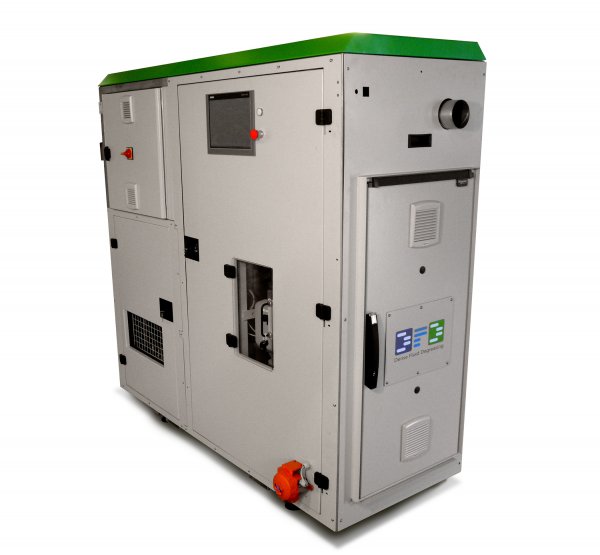
Last year, DFD received the Innovation Trophy, Eco-efficiency category, at the Industrie trade show for its machine (MC 4.1), which cleans micro mechanical parts using an exclusive dry degreasing process.
Its process, which uses supercritical CO2, is now proven and is increasingly establishing itself as a serious substitute for traditional detergents and solvents, including in the medical field. New customers, manufacturers of implantable medical devices, appreciate the exclusive productivity and ultra-cleanliness properties of this process.
The advantages of supercritical CO2 technology: dry cleaning, with no water, no solvent and no residue.
When liquefied carbon dioxide is heated above 31° C and pressurized above 74 Bar, it reaches its supercritical state and can be used as a non-polar solvent that treats parts in depth. This inert gas is safe for parts: there is no risk of corrosion for metals and very good compatibility with most polymers, which are preserved by operation at low temperatures (between 35 and 50°C).
Unlike conventional processes, machines using CO2 are also environmentally safe: they emit no VOCs and protect air quality; they use no water and help preserve groundwater; finally, they present no safety risk: they are pressure equipment that advantageously replaces ATEX processes.
In the medical field, a reduced bioburden is an asset
Supercritical CO2 technology is of interest to the medical industry because it allows residue-free cleaning in clean rooms and goes further in terms of bioburden; the cleaning quality levels achieved are still unmatched on the market. Our tests have demonstrated proven BioBurden reductions of up to 20 times lower. Another point of interest of the technology is that numerous publications report a sterilizing effect of supercritical CO2. , , This sterilizing effect is a major advantage of the DFD CO2SC process over competing processes, as shown in table 1. In addition, its low-temperature operation preserves polymers in all their forms (synthetic and biological, as threads, powders, fabrics, etc.). A single CO2 treatment sometimes replaces several successive detergent washing operations and can cut cleaning time by up to 10, and operating costs by 4 or even more depending on the case.
Proven effectiveness for sizing oil on implantable textiles
On implantable textiles, tests carried out on various polymers (PP, PLLA, PET) validated the removal of sizing oil from the textiles (which represented between 2 and 2,5% of the textile mass) at pressures between 100 and 300 bar depending on the type of sizing oil. The aim of the CO2 treatment was to eliminate solvent residues in the textiles while reducing the washing process time, which took between 16h and 24h. Analysis, according to standard NF S 94-167-5, showed that with supercritical CO2, sizing oil removal is comparable to the levels achieved with conventional processes: ?0,1%, but without any added detergent and therefore without any trace of residual solvent (unlike detergent-based processes or Soxhlet extraction with ether). Cleaning time was divided by 10 to reach between 30 and 120 min in a single operation.
