












Ellistat: the APC software solution goes even further in automation
 InfoWeb Marketplace · Editorial team
Published on 4 January 2023 · 3 min read
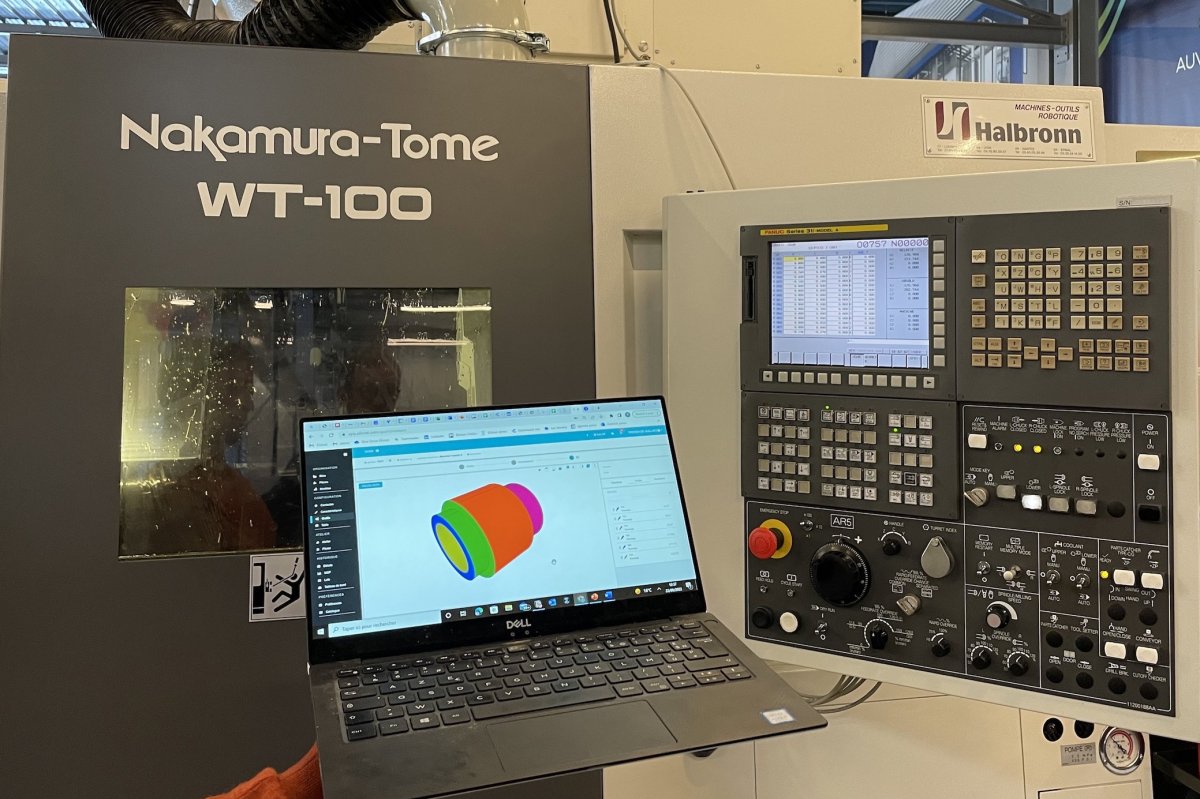
Ellistat, designer and publisher of the APC software solution, presents an update that goes even further in automating the correction process for machining centers, based on the measurement of a single part. Indeed, after the automatic calculation of the corrections to be applied to the machine, APC now includes an automatic connection to the machine tool to send these corrections. Beyond the initial goal of improving ergonomics, this update has proven to have a direct impact on production quality. Indeed, by eliminating the risks of variability and errors linked to dependence on the human factor, it further improves OEE and the scrap rate.
Developed for more than eleven years and marketed since 2017, the innovative APC (Automated Process Control) software solution makes it possible to control the variability of production processes by automating machine tool setup, regardless of the machine (turning, 3 to 5-axis machining and combined machines) and the complexity of the part. Results: scrap rate reduced by 90%, setup time reduced by 75% and average gains of about 20K per controlled machine tool per year. The solution takes into account all the dimensions and offsets of a process to calculate the best adjustment. Machine learning algorithms automatically calculate the offsets to be applied to the machine, based on the measurement of one part.
Sending correction data to machining centers: traditional method or 4.0?
Until now, once the calculations were performed by APC, users had two options. The first, which we will call traditional, consists of APC suggesting the corrections to the operator, who then enters them into the CNC. The second, developed with a 4.0 philosophy and offered since 2020 as an option, allows correction data to be sent automatically to the machine. It was offered as an option.
Davy Pillet, CEO of Ellistat, explains: ?We were surprised by the results of automatically sending the corrections. Initially, we only thought we were bringing ergonomics to the operator. But the results exceeded our expectations. By sending the corrections automatically, we saw machine OEE increase and scrap rates decrease. Yet we still calculate the same offsets. We found that the traditional method, where the operator sends the data to the machine, creates variability: between different operators, input errors, the operator's decision not to correct a given tool or not to respect the +/- 1 micron, and so on. The human factor accounts for a very large share of machine variability. By removing the human factor from corrections, we create a truly 4.0 workshop and performance reflects it.?
As an example, in 2020, the Melisey site (Haute-Saône) of the LISI Automotive Division of the LISI Group, specialized in the production of forged and then machined automotive parts, sought to achieve gains in operational efficiency and quality. Before using APC, setting up the machining centers required several iterations and consumed several parts to reach the required quality level. Now, a single part is enough. The setup time savings obtained with APC represent approximately 75%. Since 2021, corrections have been transferred directly to the multi-spindle machines. The scrap rate went from 3,5% to less than 0,1% thanks to the algorithm that self-corrects the machine tool in near real time as soon as it drifts, which led to a scrap rate reduction of around 95 %.
Stability and optimal production quality: APC now includes automatic sending of corrections to machining centers as standard
In view of customer feedback with both methods of sending corrections to machining centers, ELLISTAT chose automation. As a result, the 4.0 method of automatically sending corrections has been offered as standard in the software since early 2022. Thus, APC enables closed-loop automatic setup of machine tools based on measurements of a single part. The automatic connection is operational on Fanuc, Siemens, Heidenhain, Mitsubishi, Fagor, Okuma and Mazak CNCs.
