












Level switches break free from local checks with Endress+Hauser
 InfoWeb Marketplace · Editorial team
Published on 9 January 2023 · 3 min read
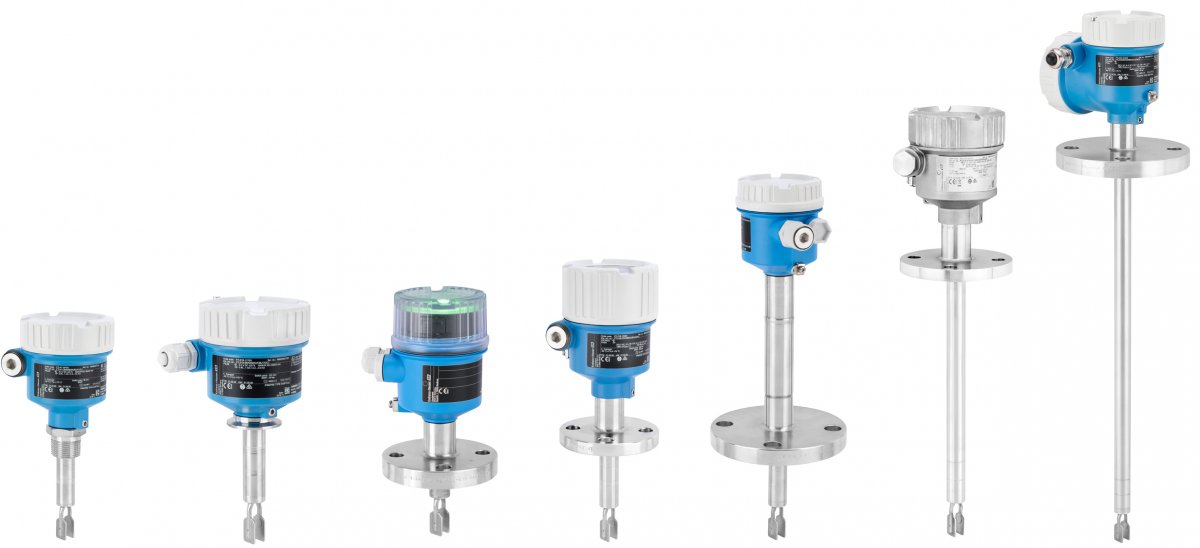
Liquiphant FTL51B, FTL62 and FTL64 vibrating fork level switches, fitted with HART electronics, make it possible in particular to run Heartbeat Verification and SIL tests remotely. While many process transmitters now offer advanced functions, such as diagnostics, functional tests, modern communications and more, a few types of sensors, such as level switches, still do not benefit from all these features. This places constraints, sometimes heavy and costly, on field technicians and operators when they have to check that a level switch mounted on a large tank is working properly, for example when it may have a problem.
Endress+Hauser now offers 8/16 mA electronics with the HART digital protocol for its Liquiphant FTL51B, FTL62 and FTL64 vibrating fork level switches for liquids, which replaced the Liquiphant FTL50/51, FTL51C and FTL70/71 respectively two years ago. ?This new electronics unlocks new functions. Customers can choose between two operating modes: a switching mode (8/16 mA) for conventional level detection and a 4/20mA mode proportional to the vibration frequency of the fork,? explains Andréa Logos, Chemical Industry Market Manager at Endress+Hauser France.
True HART 4-20 mA sensors
Liquiphant FTL51B, FTL62 and FTL64 level switches thus become true standard 4-20 mA sensors, able to send a primary value (here, the frequency of the vibrating fork) up to a PLC. One application now made possible is to differentiate between two products with clearly distinct vibration frequencies. ?In addition to the level detection information itself, in the case of a two-phase medium the customer will be able to tell whether the sensor is in the gas phase at the top of the tank, in the first phase of the mixture or in the second phase,? explains Andréa Logos.
Combining Heartbeat Technology with the HART protocol also makes it possible to set thresholds for level detection and for the change in signal frequency over time. ?Exceeding custom thresholds, and therefore sending alerts, can indicate fouling or corrosion of the vibrating fork, or a drop in resistance in the current loop. This is the role of Heartbeat Monitoring: continuously monitoring certain parameters to quickly identify a possible problem before the device fails,? explains Aurélia Genet, Team Leader Process Industries at Endress+Hauser France.
Carrying out Heartbeat Verification functional tests and SIL tests from the control system
Another benefit of the new electronics is that operators can remotely run Heartbeat Verification functional tests and SIL tests, in accordance with IEC standards 61508 and IEC61511. ?With Liquiphant FTL51B, FTL62 and FTL64 switches, it was already possible to trigger tests locally, via the Bluetooth interface and a tablet or smartphone running the SmartBlue iOS/Android app. But it is now possible to do so via the HART signal, from a control system for example,? explains Andréa Logos.
Users thus have the tools to get a real view of the health of their level switches and, ultimately, to know what is happening inside their tanks and processes. They no longer have to wait for a device to fail before intervening and can plan the most appropriate action based on the information reported by the device. Since they no longer need to remove the device to run these tests, operators no longer have to climb to the top of a tank, arrange for a ladder or even an aerial work platform to be set up, or drain a tank. This represents significant time savings for maintenance teams.
