












Editorial team · Machine tools
 InfoWeb Marketplace · Editorial team
Published on 15 April 2013 · 1 min read
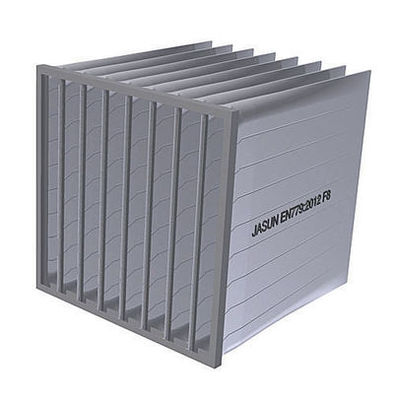
NANOFLOW synthetic nanofiber bag filter
InfoWeb Marketplace · Editorial teamPublished on 15 April 2013 · 1 min read
Following the new quality requirements introduced by the new standard EN779:2012, JASUN ENVIROCARE has developed the Nanoflow bag filter, which uses the technology of a new extra-fine synthetic fiber that provides fine filtration even in the absence of an electrostatic charge.
In March 2012, the revision of the EN779 standard resulted in the efficiency grade of most synthetic fiber bag filters being downgraded. Synthetic filters have long relied on a temporary electrostatic charge that is considerably reduced during use. As a result, the quality standard now requires filter efficiency to be assessed under a zero electrostatic charge.
The nanofibers guarantee efficiency at 0,4 microns in all circumstances, and the electrostatic charge subsequently added to the synthetic material increases its performance tenfold.
By combining the mechanical filtration of nanofibers with electrostatic fibers, this filter represents a technical advance that brings together new processes and traditional principles.
Furthermore, JASUN ENVIROCARE's expertise enables energy savings. Because its resistance to airflow is low, this filter can reach energy class A, whereas synthetic filters generally involve high energy consumption. In addition to reducing your carbon footprint, this filter therefore allows you to cut your energy costs. The performance of this filter is guaranteed and certified by Eurovent. Finally, soon to be available with a wooden frame, this filter becomes fully recyclable.
This new synthetic fiber filter offers an economical alternative to glass fiber filters, and the new generation of synthetic media makes it possible to meet the new quality challenges of the air filtration sector.
