












New FLIR Si1-LD Acoustic Imaging Camera
 InfoWeb Marketplace · Editorial team
Published on 24 April 2025 · 3 min read
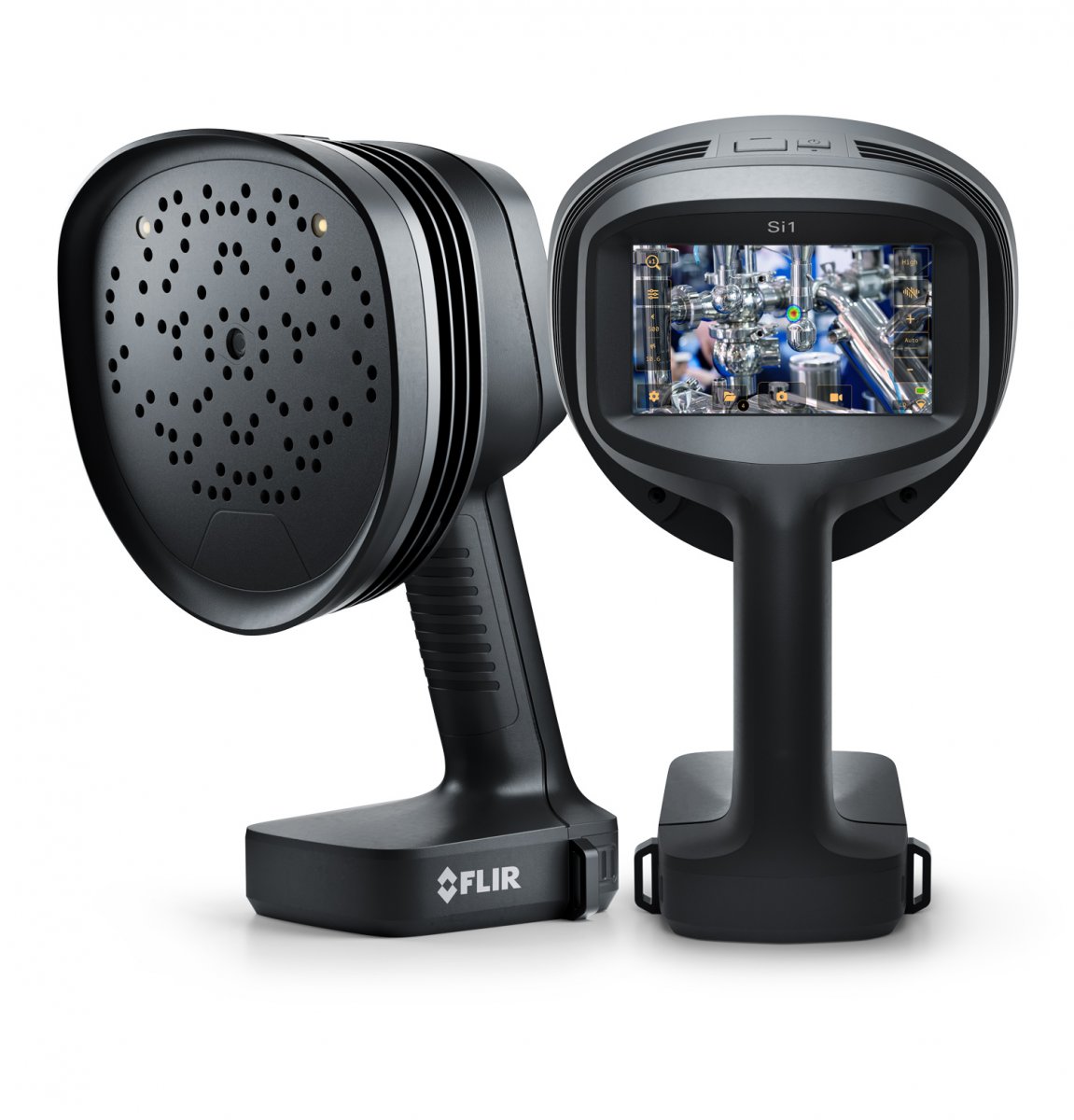
With this new acoustic imaging camera, professional inspectors can locate small compressed air leaks faster and more accurately.
FLIR, a Teledyne Technologies company, today introduced the Si1-LD, an industrial acoustic imaging camera that detects compressed air leaks faster and more accurately for companies with a modest condition monitoring budget. The new FLIR Si1-LD offers improved detection and quantification capabilities compared with the existing FLIR Si124-LD Plus, as well as a wider frequency range.
Compressed air systems typically lose 25 to 30% of their air through leaks, resulting in proportionally higher energy bills, costly unplanned production stoppages, reduced compressor service life, the need to purchase additional compression capacity, and increased equipment maintenance costs.
Leveraging the benefits of ultrasonic technology, the new FLIR Si1-LD locates leaks with improved imaging sensitivity at an affordable price. It offers a number of remarkable features and characteristics:
• An array of 96 microphones (2-100 kHz) facilitates the automatic detection, localization and measurement of compressed air and vacuum leaks from a safe distance of up to 130 m. A 12 MP color camera with 8× digital zoom and an LED light makes it easier to capture visual details.
• The bandpass filter allows inspectors to effectively eliminate any confusing and/or incorrect ultrasound source without manual adjustment. Simply use the bandpass filter to manually set the required frequency range and clearly display the source of interest on the very rare occasions when this is necessary.
• The lightweight, compact FLIR Si1-LD acoustic imaging camera and advanced artificial intelligence are easy to use with minimal training, which is ideal for quick inspections in large facilities.
• The touchscreen interface displays high-resolution images to make problems easier to identify, with real-time on-device quantification of leak volume, flow rate and annual leak cost. Users can leverage this data to prioritize repairs. The data can also be included in sustainability reports to show energy reduction initiatives.
• Wireless data transfer ensures seamless reporting and analysis options, using FLIR Acoustic Viewer online or FLIR Thermal Studio offline, effortless data backup and sharing across teams within the organization, while also providing the backbone for OTA (Over The Air) firmware updates. The software allows users to create reports using predefined or fully customizable templates.
?Many manufacturing and processing plants see their energy bills rise because of leaks in compressed air systems, which increases operating expenses (OPEX) and erodes margins,? explains Darrell Taylor, Acoustic Business Development Manager at FLIR. ?If you want to find leaks quickly and easily with minimal technician training, our new industrial acoustic imaging camera Si1-LD offers a fast and accurate solution for sustainable manufacturing. In addition to reducing energy consumption, the new device saves you maintenance, repair, operating and investment/OPEX costs, while improving personnel safety. With a minimum detected leak rate of 0,01 L/min at 2,5 m, our Si1-LD offers the best combination of performance and ease of use on the market in its price category.?
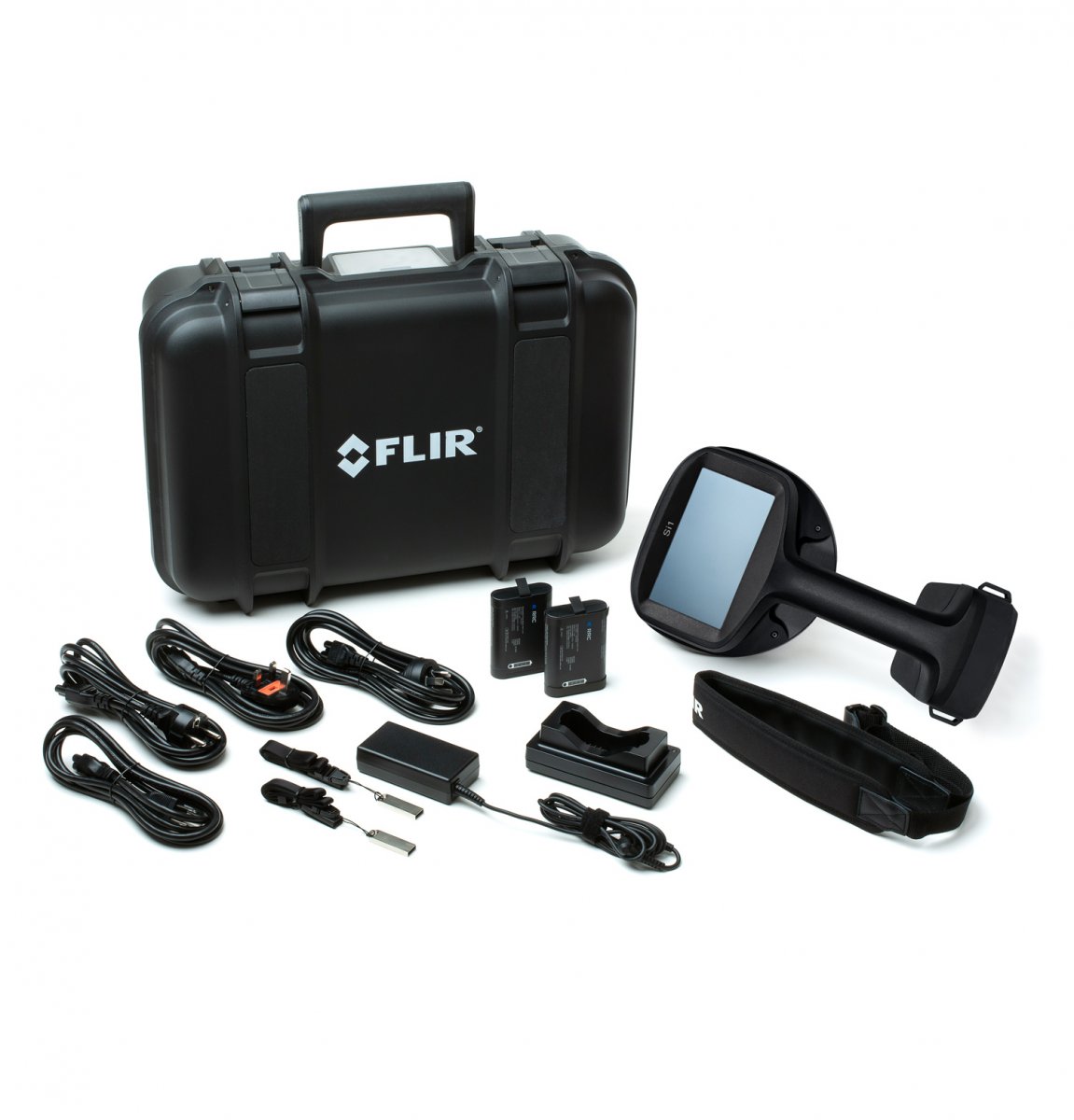
The new acoustic imaging camera comes with two batteries, an extra battery cover, a battery charger, a neck strap, a hard case, a USB flash drive, access to free versions of the online and offline acoustic analysis and reporting software, and a two-year warranty. The data transfer cable is a handy new accessory that lets users connect the camera directly to a PC/laptop, making file access easier in companies that prohibit the use of Wi-Fi and USB flash drives. Users can upload their acoustic images to FLIR Thermal Studio or FLIR Acoustic Viewer.
The Si1-LD is available in two versions, with and without Wi-Fi. All other features are identical.