












New Renolit Gor 100% recyclable glass-fibre composite for cars
 InfoWeb Marketplace · Editorial team
Published on 19 February 2019 · 2 min read
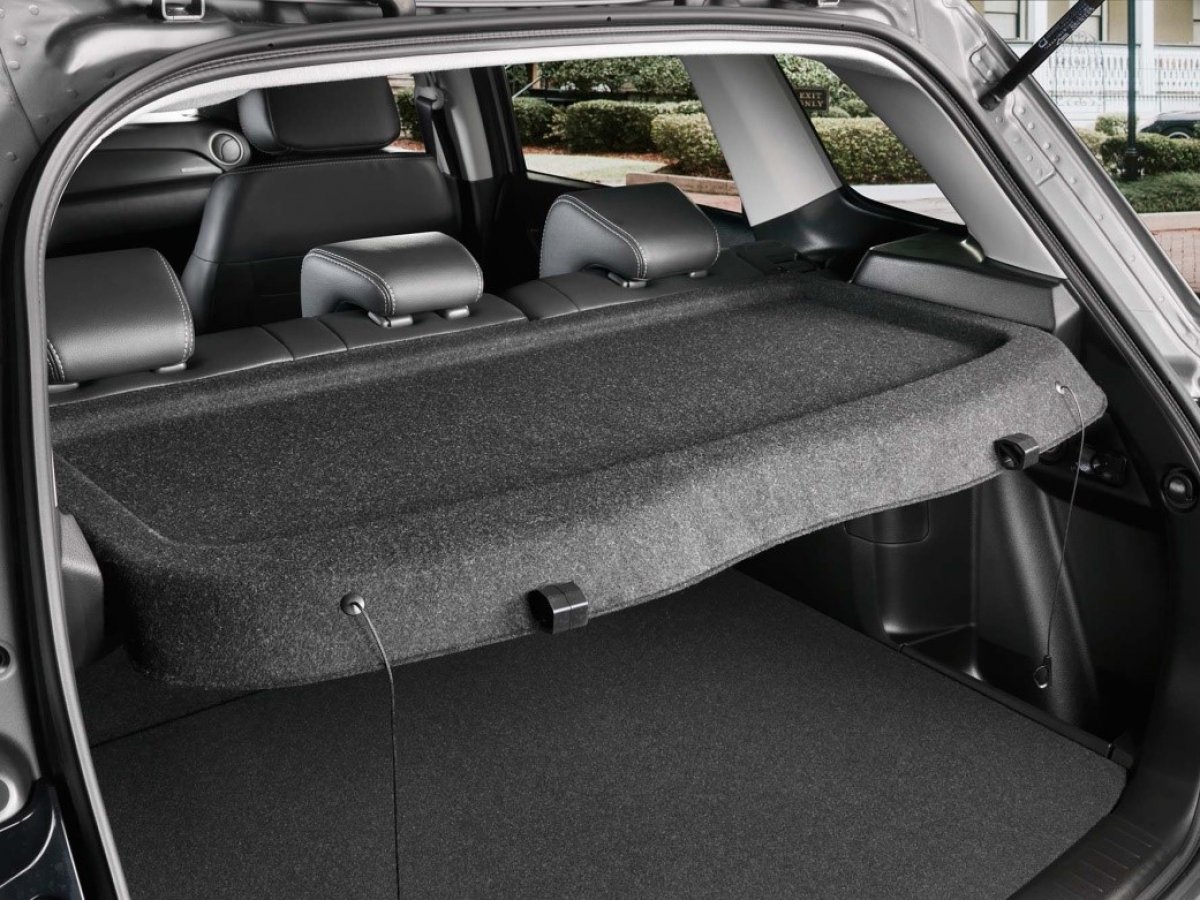
Renolit Gor, a specialist in the extrusion and thermoforming of automotive parts, has seen global demand grow for its innovative composite Renolit Tecnogor, a glass-fibre-reinforced composite that is safe, clean and 100% recyclable.
Renolit GOR, which already holds a leading position in the market for extrusion and thermoforming of automotive parts, has seen global demand take off for its innovative composite Renolit Tecnogor, a glass-fibre-reinforced composite that is safe, clean and 100% recyclable. Automotive suppliers have caught the attention of many buyers at car manufacturers by demonstrating that it is possible to produce parts with improved performance while ensuring consistent quality, increasing productivity and reducing manufacturing costs. Many German, Italian, French and Japanese car makers now use Renolit Tecnogor to manufacture various thermoformed interior parts with a custom surface finish. Applications include rear parcel shelves, floors and rear trunk trim parts, seat back trims and dashboard inserts.
Renolit Tecnogor is a lightweight thermoplastic composite, supplied in sheet or roll form, which proves to be a versatile, high-quality and high-performance solution for cost-effectively producing parts with a wide choice of finishes. For thermoformers, this PP/GF substrate has the great advantage of being formable in a single step without bonding. In manufacturing, it is safer to handle than glass-fibre-reinforced woven fabrics. Indeed, in Renolit Tecnogor the glass fibre is fully embedded in the PP matrix during extrusion, which avoids airborne fibres or fibres on the surface of the parts, which thus have a smooth surface and smooth edges and can be handled safely.
To reduce cutting waste, Renolit Tecnogor is generally supplied as custom-sized sheets fitted with a highly compatible film for heat-bonding a textile or other covering material.
Designers of automotive interior trim can take advantage of the outstanding mechanical properties of Renolit Tecnogor, according to the published technical data sheet for type A:
- flexural modulus (I.S.O. standard 178) = L. 8200 N/mm² and T. 3200 N/mm²;
- Charpy impact strength (I.S.O. standard 179) = L. 17 KJ/m² and T. 15 KJ/m²;
- heat deflection temperature under load, HDT (I.S.O. standard 75A) = L. 145 °C and T. 120 °C.
Renolit Tecnogor owes its superior stiffness and impact resistance to the patented composition and extrusion process used on the production lines of Renolit Composites in Italy.
Customers benefit from the added value provided by the technical support and know-how of the Renolit Composites team. According to Francesco Maffione, Sales Manager Automotive Products at Renolit:
?Our approach is to work closely with converters and car manufacturers and, thanks to our specialist knowledge and our extensive network, to enable our customers to reduce costs and increase the productivity of thermoforming parts. We focus on ways to increase machine utilisation, eliminate process steps, reduce the number of tooling changes and shorten cycle times. We are also involved in new product development projects through rapid technical support, including the supply of trial samples that we produce on our integrated prototype thermoforming line.?
Products in the Renolit Tecnogor range are offered as sheets with a thickness of 0,8 to 2,3 mm, a width of up to 1800 mm (max.) and a length of 0,4 to 4,0 m. Rolls are available on request, with a thickness of 0,8 to 1,3 mm and a maximum length depending on the desired thickness and width. Standard colours are black and grey, with other colours available on request.
