












OPEN MIND supports a machining research project
 InfoWeb Marketplace · Editorial team
Published on 12 January 2023 · 2 min read
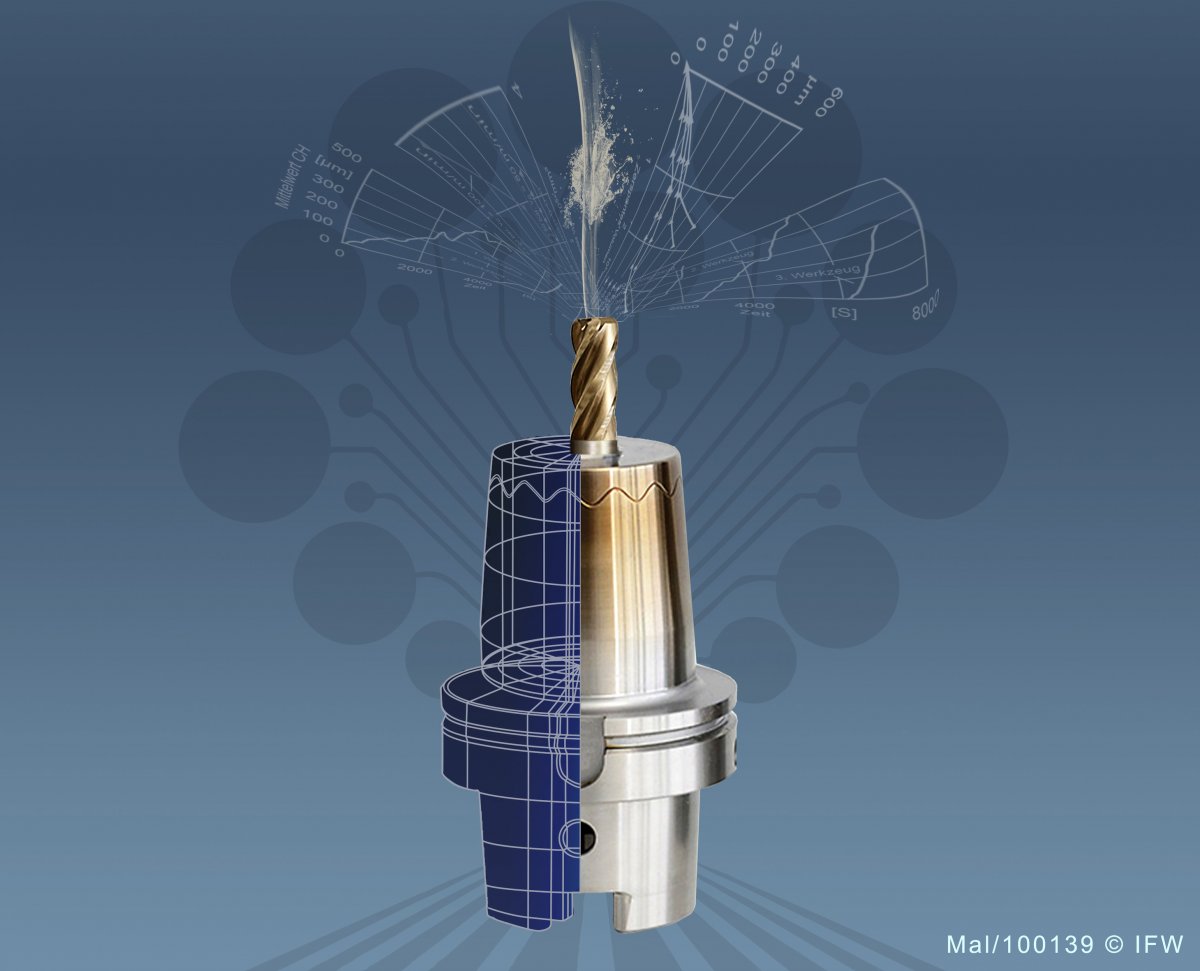
The Institute of Production Engineering and Machine Tools at Leibniz University Hannover has carried out research to study the possibility of saving energy during machining operations by adjusting the coolant pressure. OPEN MIND provided financial support for the project and supplied the part geometry as well as the CAM programming for the machining and the analyses. During the project, a method was developed that makes it possible to determine the optimal coolant pressure level according to the degree of tool wear. The result: up to 33% energy savings. In the future, methods based on ?machine learning? will make it possible to control the required pressure by using an optimized NC code.
Professor Berend Denkena, Talash Malek (Master of Science), Martin Winkler (qualified engineer) and Marcel Wichmann (MS) presented their project in the April issue of the VDI-Z magazine of the Association of German Engineers, under the title ?Energy Efficient Process Planning? (Energy Efficient Process Planification). While the authors were looking for ways to design more sustainable machining processes, they began to address the topic of high-pressure cooling. High-pressure lubrication systems can extend tool life by up to 250%. At the same time, they are responsible for 25% of a machine tool's energy consumption.
Performance research - tool wear
Tool wear differs depending on the machining strategy used and the material removal rate during milling. At a certain point, increasing the lubricant pressure no longer increases tool life. This also means that, in many situations, an unnecessary quantity of coolant is supplied. The researchers tested the machining program developed by OPEN MIND, which consists of roughing several pockets in a Ti-6AI-4V block using a solid carbide end mill. They studied the effects of different machining strategies and coolant pressures on tool wear.
Machine learning
Based on their findings, a simulation based on ?machine learning? was developed, capable of using process data to predict the tool wear rate. The machine learning model was used to simulate the machining process with different coolant pressure levels. The researchers validated their results using real components, and the tests confirmed that the same surface qualities and tool life could be achieved using a reduced pressure level, depending on the machining application. The energy savings of up to 33% were even slightly higher than predicted after running the simulation.
A revolutionary breakthrough for industry
?We are pleased to have been able to contribute to this project and we are impressed by the result,? says Dr. Josef Koch, Chief Technical Officer of OPEN MIND Technologies AG. ?The project resulted in two methods that will allow us to go even further in the development of our CAD/CAM systems. Dynamic control of the coolant pressure could, in the future, be integrated into the NC code generator of hyperMILL.?
