












SICK presents 14 innovations to optimize production
 InfoWeb Marketplace · Editorial team
Published on 3 May 2024 · 6 min read

SICK solutions for production optimization, energy efficiency and machine availability
• The deployment of latest-generation digital solutions increases productivity, flexibility and responsiveness while guaranteeing the required manufacturing quality.
• SICK's broad range of solutions and the strong automation and control expertise of its teams ensure effective support for manufacturers on their ongoing journey toward the industry of the future.
• SICK is taking advantage of its presence at the Global Industrie Paris 2024 trade show to present its cutting-edge solutions, sensors and services, as well as its expertise in five main areas: production monitoring, production optimization, maximizing machine availability, improving energy efficiency and predictive maintenance.
Production monitoring
Production data is a valuable resource. When used intelligently, it can significantly improve industrial performance.
Collecting and processing production data from various machines, sensors and other equipment is nevertheless no easy task. SICK designed the DynamicDataDisplay solution precisely so that these operations are carried out simply and seamlessly. This solution makes it possible to visualize individually compiled data quickly and intuitively. Users simply create their own dashboard using various widgets, without programming, with simple drag-and-drop actions.
This tool makes it possible to analyze data from multiple sources, with the help of SICK LiveConnect, a connection standard between sensors and actuators and the cloud. DynamicDataDisplay can also collect data from other manufacturers' devices via standard connection tools such as REST API, websockets or MQTT. Another advantage: DynamicDataDisplay is hosted on a cloud platform. This makes it possible to view data from anywhere, on a PC or on mobile devices, without any software installation.
Plant and production managers can thus always keep an eye on their indicators and quickly make the necessary decisions if certain parameters drift.
Production optimization
Industrial cameras and their embedded image processing systems make it possible to automate manual inspection applications in order to improve the speed and reliability of inspections, or to optimize robot guidance in their operations in order to gain efficiency and repeatability.
Industrial vision systems thus contribute to higher product quality, optimized processes and increased productivity. SICK offers a wide range of 2D and 3D cameras that can be combined and paired with localization and processing algorithms in order to deploy a solution perfectly suited to the needs of each industrial application.
To speed up application deployment, SICK offers ready-to-use software solutions. These SensorApps save the time and money spent on developing custom software. Some applications are designed for very specific tasks: 3D object detection, dimension measurement, inspection and sorting by size and by color, reading of complex labels with character recognition (OCR), part localization, robot guidance, etc.
Others contain a set of software tools that make it possible to adapt the application to different tasks. SensorApps are easy to install and can be adapted to individual needs. The SensorApp Intelligence Inspection Deep Learning combines traditional machine vision technologies for quality control with artificial intelligence (deep learning) processing capabilities. This opens up new possibilities for automating demanding inspection tasks that were not possible before. And it does so at a low total cost, since the deep learning neural network runs directly on the camera, without additional hardware. Intelligence Inspection is designed to facilitate complex sorting and inspection tasks for natural products, irregularly shaped goods, packaging and assemblies.
It also makes it possible to check the orientation of wooden profiles by recognizing their structure, inspect highly reflective surfaces, classify objects with slight differences within the same class, such as food products, or check the integrity of solder joints on electronic boards.
Production optimization also relies on the precise localization of mobile equipment, pallets and other containers in the manufacturing process.
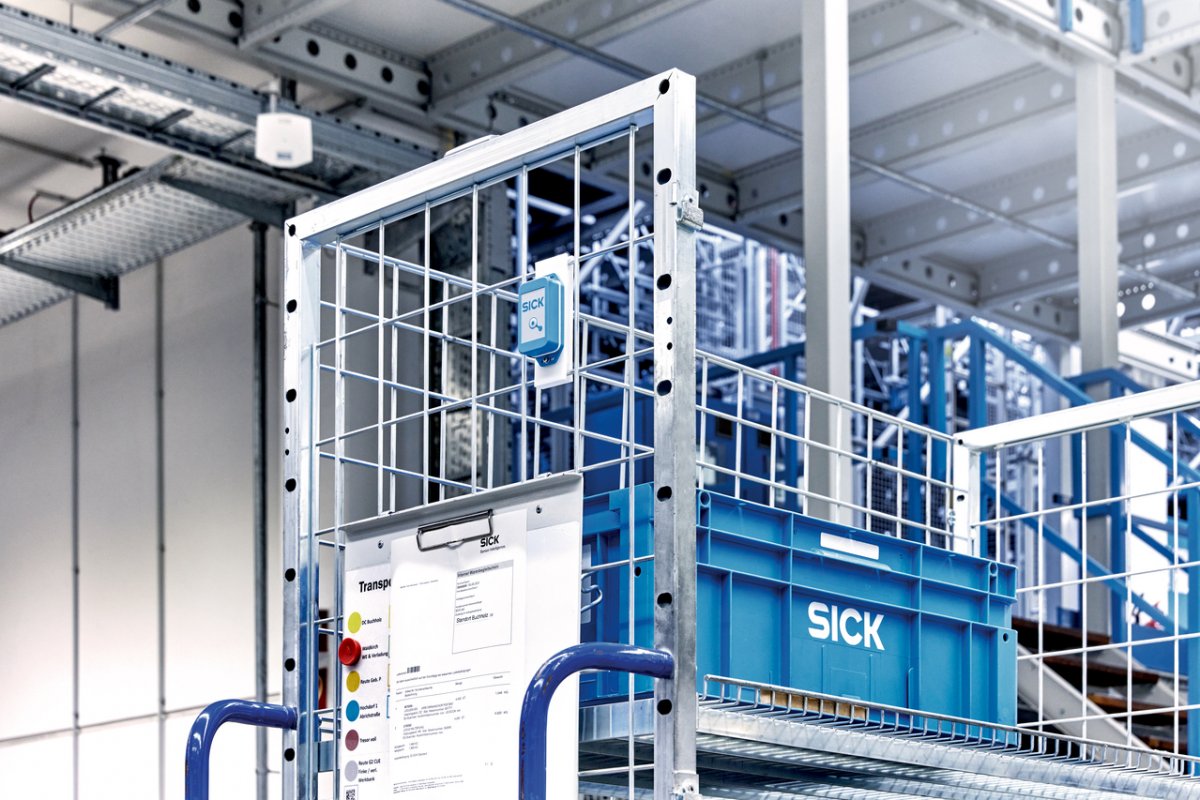
To this end, SICK offers the Tag-LOC System, which makes it possible to locate, track and manage assets with precision. Thanks to antennas and tags using the UWB protocol, a standard technology designed for short-range wireless communication, this solution determines in real time the exact location of assets such as mobile machines, parts, materials, tools, etc. This ensures precise tracking and flawless traceability of such assets, as well as real-time control of goods movements and material flows.
SICK's Asset Analytics software also makes it possible to visualize and evaluate the recorded data. Depending on the application requirements, the Tag-LOC system can be combined with identification technologies such as RFID and LiDAR. Production and logistics processes can thus be fully automated.
Machine availability
It is not always easy to assess whether older-generation machines are still operating efficiently. Production sites operate a heterogeneous fleet of equipment. This does not always provide a clear view of machine availability. This prevents corrective actions and relevant decisions about their production capacity, performance and efficiency.
SICK therefore offers solutions that deliver indicators on the overall performance of machines or of an entire production process.
SICK's gateways and sensors record the status of all machines and transmit the data to a cloud platform where it is stored, processed and made available to the teams in charge of machine monitoring. OEE (Overall Equipment Effectiveness) indicators allow them to easily determine how efficiently a plant and its equipment are operating. A concise visualization interface fed by field data reveals why specific machines or production lines are not performing as expected, thanks to the classification and analysis of machine status.
This clear information enables decisions that help increase availability and reduce production losses caused by machine failures and unplanned downtime.
Maintenance
A condition-based maintenance application must rely on data to monitor the condition of machines and equipment in real time.
The SICK MPB10 sensor is perfectly suited to this type of application. By measuring vibrations (± 8 g), shocks (up to 200 g) on three axes and temperatures (–40 to +80 °C), it makes it possible to monitor a piece of equipment. Tracking these various parameters makes it possible to identify changes that may indicate a developing problem. This enables manufacturers to address conditions likely to shorten a machine's service life by scheduling maintenance appropriately. The SICK MPB10 sensor can help, for example, to detect a malfunction in a motor, pump, fan or conveyor. By alerting to abnormal vibration levels or excessively high temperatures, and by providing precise condition data, it makes it possible to anticipate potential failures and helps reduce machine downtime and operating costs.
Energy efficiency
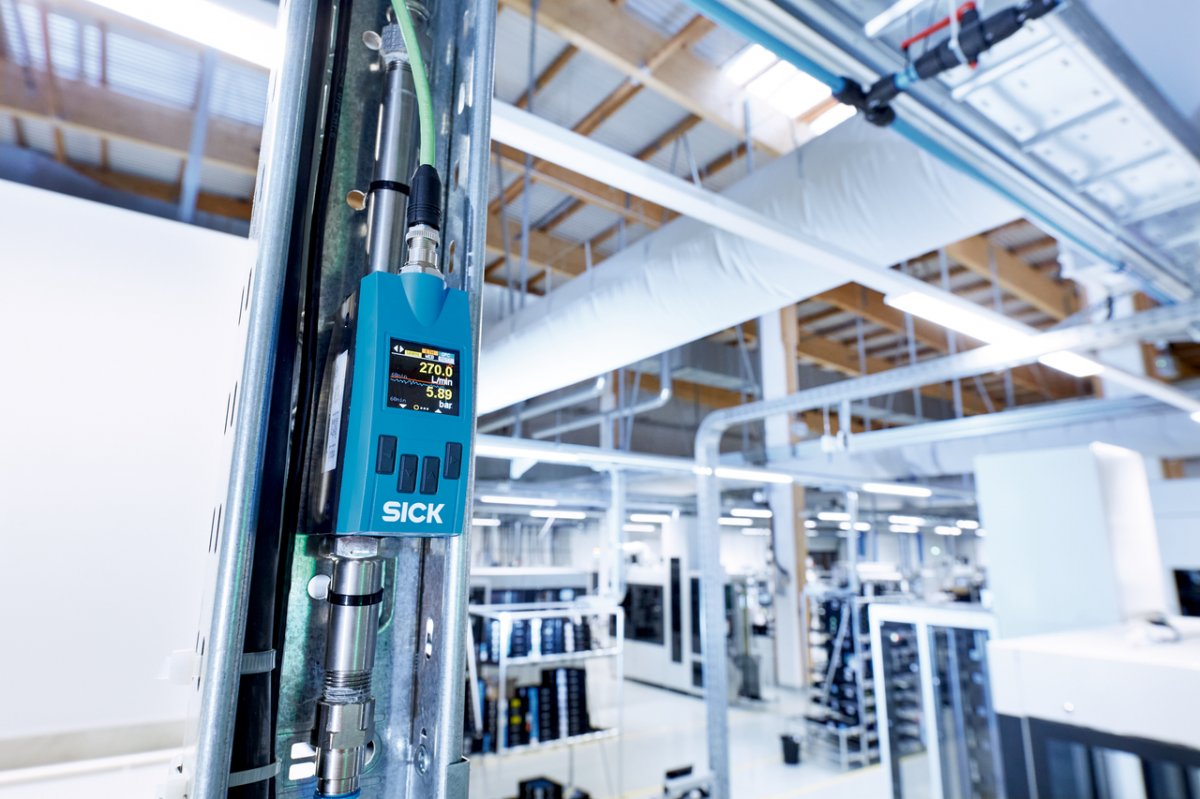
In some situations, energy waste in manufacturing workshops can be largely attributable to poor control of air consumption, undetected leaks and poorly managed standby and shutdown processes. Installed on the compressed air network, SICK's FTMg thermal flowmeter aims to solve such problems by monitoring air consumption.
By measuring and tracking flow, it makes it possible to identify excessive use and anomalies. With an integrated web server, it makes the consumption data history available to the operator, who can thus optimize machine operation, repair leaks and avoid overconsumption...
In addition to improving energy efficiency and controlling costs, the g also helps improve machine availability. It becomes possible to intervene on a machine as soon as a drift in air consumption is detected. A maintenance operation can be scheduled before this drift, a warning sign of a malfunction, leads to an unexpected machine stop. The FTMg is also equipped with a PoE (Power Over Ethernet) interface that makes it possible to power it and ensure seamless web-type communication with a PC or a cloud platform. All measurement data can also be transmitted via the IO-Link digital interface.
New products
With its reputation as a technology leader, SICK will also present no fewer than 14 new products.
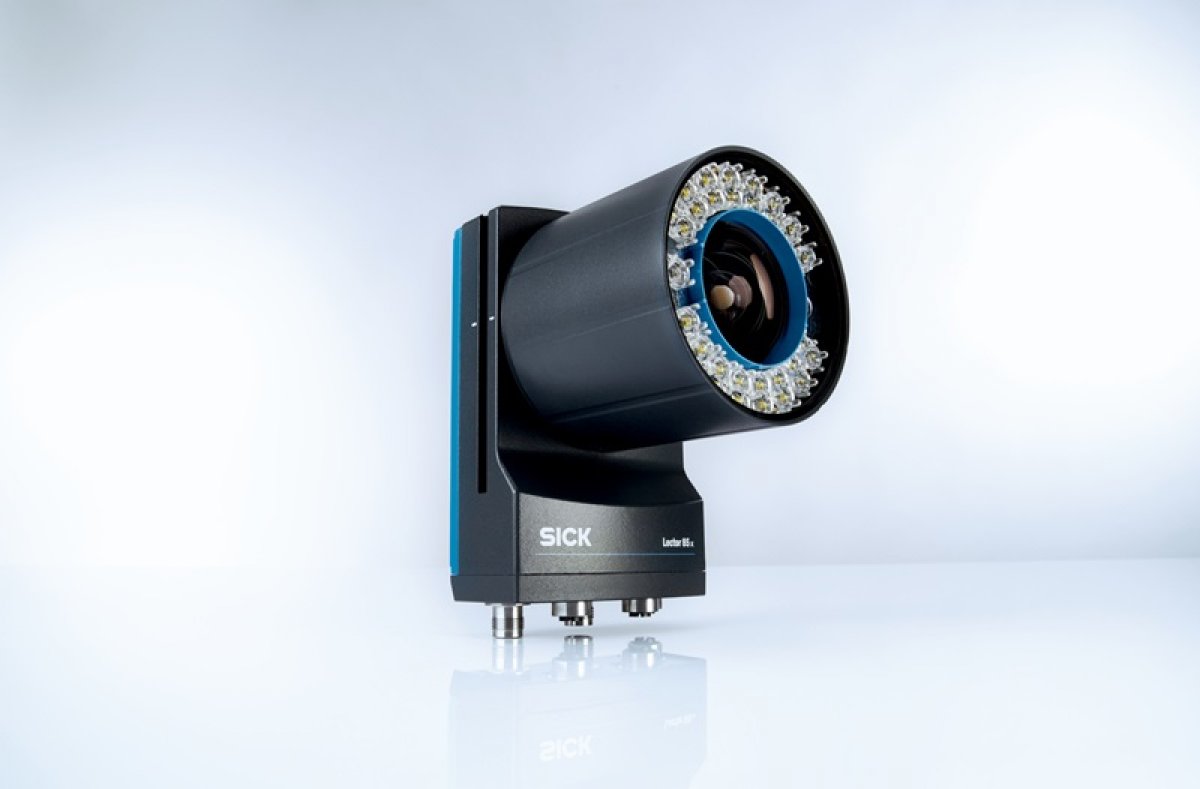
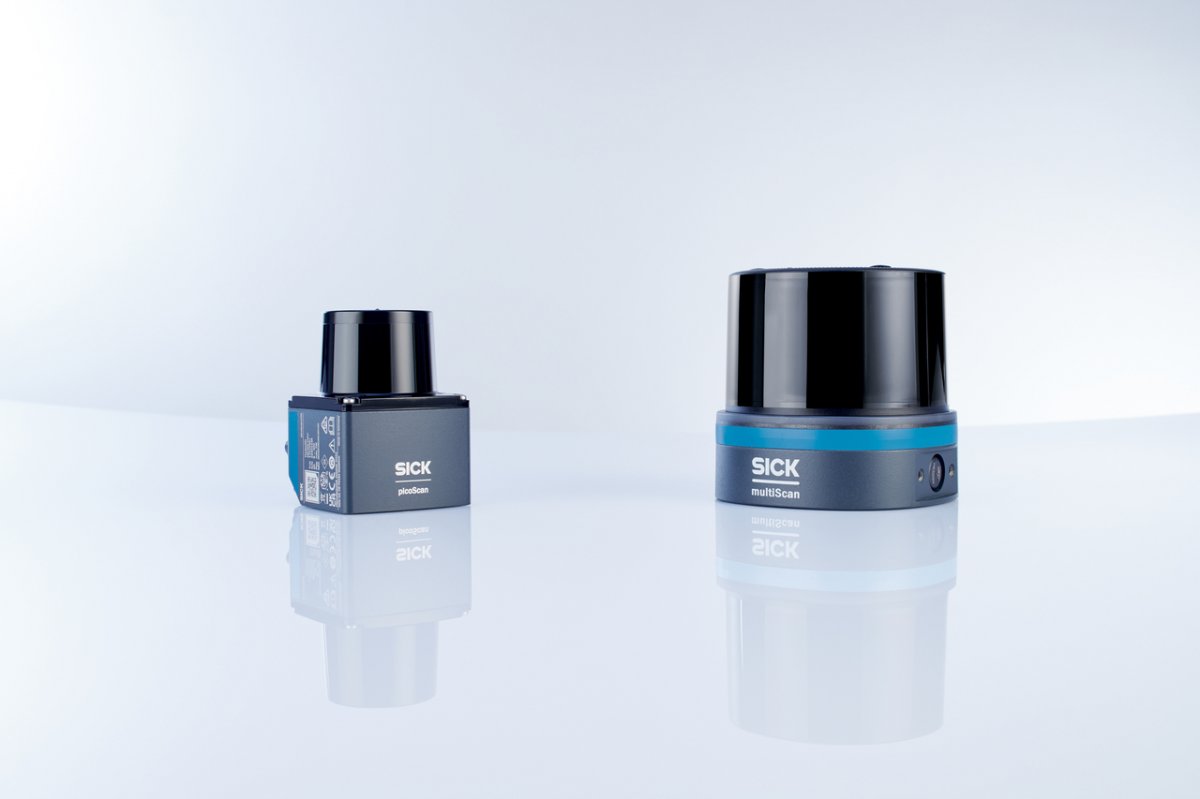
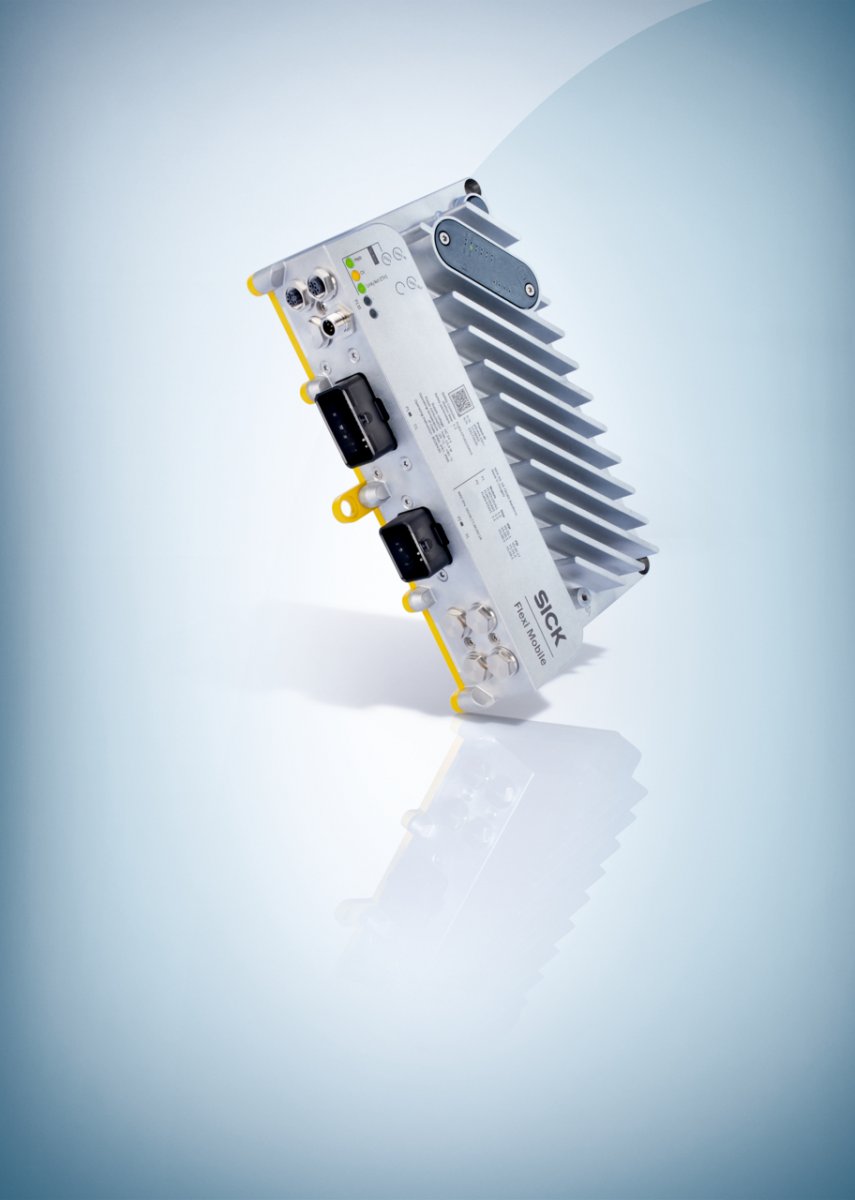
These include: the Flexi Mobile in industrial safety, a new safety controller for mobile applications, as well as a muting module for safety light curtains, the DDM4, high-performance code-reading cameras such as the Lector61x or the Lector85x in automatic identification, but also the picoScan100 and the multiScan100, LiDAR sensors for ever more reliable and more adaptable perception of the environment.
Finally, sensor settings via touchscreen are becoming more widespread, notably with a new touchscreen pressure sensor, the PBST, and the new latest photoelectric sensor W10.
