












SICK's W12L photoelectric sensor meets the challenges of object detection
 InfoWeb Marketplace · Editorial team
Published on 26 January 2023 · 3 min read
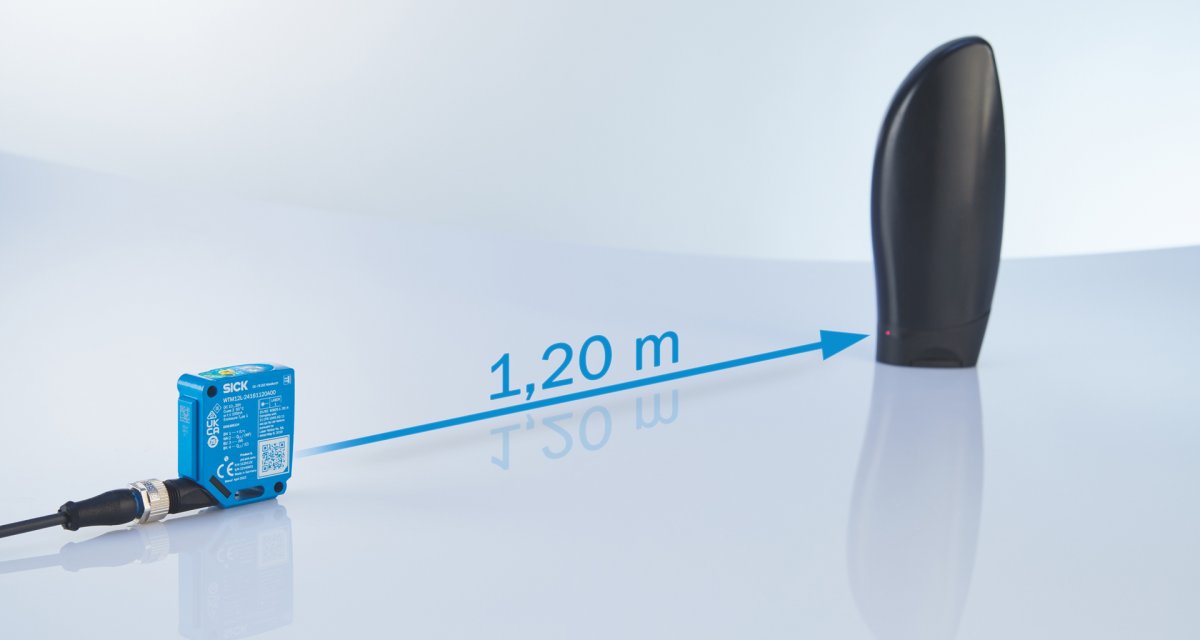
In applications requiring the detection of objects with perforated, structured or uneven surfaces, LineSpot technology guarantees optimal detection reliability thanks to its line-shaped light spot.
The W12L range includes retro-reflective sensors with a switching distance of up to 12 m and diffuse sensors with sensing distances of up to 1,2 m. Detection reliability is ensured for long distances as well as for short-range applications. The particularly precise light spot generated by the laser class 1 light spots of the sensors also makes it possible to identify even filigree objects and features - depending on the mounting situation, even through very small holes or recesses. In applications requiring the detection of objects with perforated, structured or uneven surfaces, LineSpot technology guarantees optimal detection reliability thanks to its line-shaped light spot.
The MultiMode diffuse sensor: a wide variety of functions in a single device
One sensor for the most diverse requirements and complex applications
Many users are looking for a versatile sensor with maximum flexibility, and the WTM12-L diffuse sensor with MultiMode meets these expectations perfectly. Seven operating modes are available. The background suppression and foreground suppression modes, as well as the teach-in function for two independent switching points, guarantee optimal detection reliability in a variety of applications. The Window mode makes it possible to detect objects within a defined window. The ApplicationSelect mode makes it possible to set the sensor to a shorter response time or to increased sensitivity. It is also possible to obtain a distance value via IO-Link. With this MultiMode version, the W12L ensures optimal operation for every case. Installation and commissioning teams always work with the right sensor on the machine, and the maintenance team always has the right sensor available during troubleshooting. This saves time and money.
The BluePilot user assistant ensures a quick and convenient start-up of the photoelectric sensor
With the BluePilot concept, users are able to configure the W12L in seconds. To do this, the sensors can be set intuitively via potentiometer - quickly, precisely and reliably. The LED display informs the user about the optimal alignment (retro-reflective sensors) or the set switching distance (diffuse sensing). During operation, BluePilot also provides a visual indication when detection quality decreases because of dirt or vibration. This makes it possible to anticipate system malfunctions.
Sick W12L, a photoelectric sensor that is robust in every respect
SICK has also thought of everything when it comes to the robustness of the W12-L. The metal housing (die-cast zinc) withstands the most intense stresses, whether mechanical, chemical or even thermal, ensuring a long service life even in a harsh environment. In terms of detection, thanks to the polarizing filter on the received signal in the W12-L, the sensor is able to distinguish between a reflector and stray light or depolarizing objects, such as safety vests, packaging films or the adhesive tapes on parcels. This detection reliability reduces the risk of false switching and therefore process disruptions.
Data provider for diagnostics and monitoring ensuring predictive maintenance
As a Smart Sensor with IO-Link communication, the W12L is able to provide a wealth of status information and data for production and control processes, as well as to execute defined Smart Tasks autonomously. In addition, the sensors provide in-depth data for self-diagnosis during operation and for predictive maintenance. In this way, the W12L ensures increased availability and is a safe, long-term investment.
