












SW France diversifies with machining solutions for the medical sector
 InfoWeb Marketplace · Editorial team
Published on 19 March 2024 · 4 min read
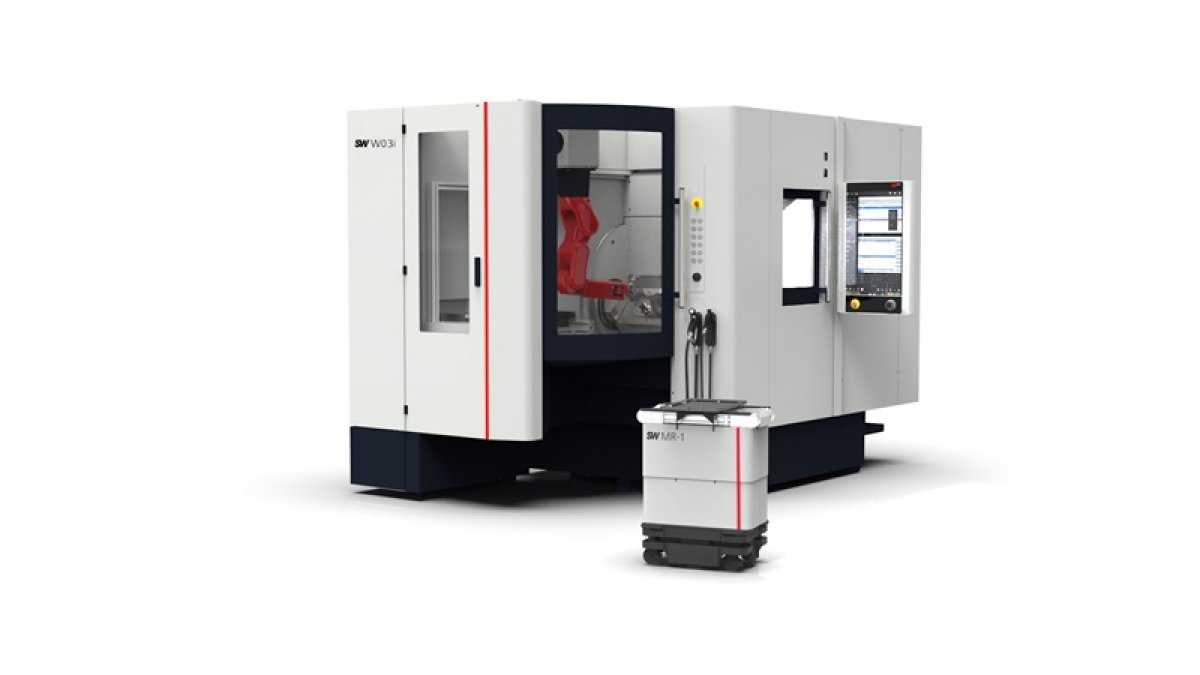
SW France continues its diversification strategy with machining solutions for the medical sector
Flexibility, precision, repeatability and a small footprint with SW twin-spindle machining centers
SW France, a subsidiary of the world leader in horizontal multi-spindle machining centers and historically a partner of the automotive sector, is continuing its diversification strategy. The SW range of compact machines perfectly meets the requirements of the medical sector for machining medical devices such as prostheses and surgical instruments. SW France draws on several decades of experience and the know-how of the parent company (Germany) in this cutting-edge sector.
Medical machining, which covers the manufacture of medical devices such as implants, prostheses and surgical instruments, including ancillary instrument kits, is subject to specific constraints because of the critical and sensitive nature of the end products. The machine tools used in medical machining play an essential role in manufacturing high-quality medical devices that comply with regulatory standards. In Germany, in the immediate vicinity of the machine tool manufacturer SW, is the Medical Technology Production Center. For many years, SW has been a partner of renowned manufacturers that develop and produce medical devices used around the world.
Specific materials that are demanding to machine
Medical devices are often made from specific materials such as titanium, stainless steel, chrome-cobalt, and even biocompatible polyethylene. These materials must be machined with precision to ensure compliance with medical standards and guarantee biocompatibility. However, some medical materials, such as titanium and chrome-cobalt, can be difficult to machine because of their hardness. SW machining centers are perfectly suited to these specific materials and ensure efficient cutting without compromising surface quality. Examples of medical devices machined on small SW machining centers include surgical instruments such as scissors, forceps, punches and rasps, as well as prostheses for hip and knee joints and bone plates used in joint and spinal surgery.
The need for flexibility to run small batches of a wide variety of parts in succession
In Europe, and in France in particular, medical device manufacturers are mostly small companies that produce small to medium batches of extremely precise and varied parts.
As Régis Alexandre, Managing Director of SW France, explains: ?SW's innovative solutions demonstrate great flexibility. A single clamping system makes it possible to machine, from 7 different blanks, many dimensional variants of finished parts. The machine can also be fitted with ?zero-point? solutions, allowing the workpiece clamping system to be changed in a few minutes with an accuracy of a few microns. Part-loading robots give manufacturers the extreme flexibility they need to chain together batch changeovers. With the loading robot, the machining center becomes autonomous, in particular during production runs launched on weekends.?
Extreme precision and exemplary repeatability
Moreover, dimensional and geometric tolerances in medical machining are often very tight. Precision is crucial to ensure perfect fit, functionality and safety of medical devices. In addition, the surfaces of medical components often need an appropriate surface finish, either mirror-polished to minimize the risk of tissue irritation and reduce the potential for contamination, or rough to ensure perfect osseointegration.
SW machining centers are designed to minimize vibrations and ensure stable cutting, in particular when machining biomedical materials such as titanium. They deliver high precision to meet the tight tolerances required, as well as a perfect, burr-free surface finish.
SW multi-spindle solutions and drives with linear axes deliver the shortest machining times and the highest precision and productivity. Thanks to their monobloc construction, SW machines offer exemplary rigidity and repeatability.
For example, the BAW02 machining center (200 mm spindle center distance) and the BAW03-22 machining center (300 mm center distance), presented as a world 1ère preview at the EMO show 2023, offer unrivaled precision with tolerances in the micron range (flatness, parallelism), exceptional repeatability and reduced maintenance. Thanks to their operating principle, the linear motor runs without wear in every application and thermal stability is guaranteed. The horizontal position of the two spindles protects the parts that are not in contact with the chips, and cleaning is made easier because the part is flooded with coolant. For composite parts, SW offers dry machining solutions. The machining centers can also be equipped with robotic automation.
The twin-spindle solution: 2 machines in 1, a reduced footprint in the production facility
?Most medical device manufacturers,? comments Régis Alexandre, ?have little space in their production facility. So it is often preferable to opt for a twin-spindle machine, capable of producing as much as two machines but more economical. The floor space is halved, as are energy requirements. This is also attractive in the current context of labor shortages in workshops and high energy costs.?
SW positions itself as a partner
The team of project engineers and application technicians at SW France acts as a true partner, able to provide solutions to medical device manufacturers. Depending on the machining needs, these may be turnkey solutions including the design of workpiece clamping systems, time studies, programming of machining cycles and tool definition. Automation solutions such as a robotic loading system are often recommended.
Customers benefit from services called ?life service?, the aim of which is to maintain productivity at the highest level and considerably extend the life cycle of their machine(s). Indeed, thanks to a direct online connection to the machine, the SW France team provides permanent monitoring of the parameters deemed essential. In the event of an alert, action is triggered immediately, a remote diagnosis is made and a solution is quickly proposed.
