












Editorial team · Industrial machines, Equipment
 InfoWeb Marketplace · Editorial team
Published on 7 September 2009 · 2 min read
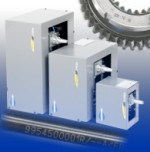
Technifor XF510Sp and XF510Dp marking machines
InfoWeb Marketplace · Editorial teamPublished on 7 September 2009 · 2 min read
With marking fields of 100x80 mm and 200x80 mm respectively, the XF510Sp and XF510Dp models complete Technifor's range of pneumatic dot peen marking machines.
They are the fastest in the world in their category and can mark up to 10 characters per second, twice as many as previous generations. They are compact and have multiple communication interfaces, which makes them particularly easy to integrate.
The XF510Sp and the XF510Dp are ideal solutions for high-volume precision marking applications: mechanical engineering, automotive, locksmithing, pneumatic components, electronic components, sensors...
From the very design of the XF510Sp and XF510Dp models, marking speed was set as the priority.
First, the use of the latest generations of electronic components has reduced calculation times.
Next, the back-and-forth path of the marking head has been optimized. Finally, a new motor control system has been installed. New micromechanical components have also been integrated.
The XF510Sp and XF510Dp marking machines can mark up to 10 characters per second and produce a Data MatrixTM code in less than 5 seconds.
The XF510Sp and XF510Dp machines are easy to use. Their UC500 remote control unit is designed to be used anywhere in the world. It currently features an interface in 20 languages, supports 14 keyboard types, and has a universal power supply compatible from 90 to 250 V.
A production line designed in a given country can thus be exported anywhere in the world without any modification. The control software is also very user-friendly, based on pictograms, and offers multiple marking possibilities: fixed text, variable text (dates, counters, shifts, variables, ...), logos, DataMatrixTM codes, flat, angular and radial marking, ...
Finally, the XF510Sp and XF510Dp marking machines are particularly open. As standard, they have a card with 8 inputs and 4 outputs, and RS232, USB and Ethernet ports. They can be controlled via either an Ethernet or RS232 link (exchange of information on marking start, end of cycle, cycle stop, machine ready to mark, marking in progress, ...).
The USB port is used in particular for backups, software updates, transferring marking files, logos and fonts, saving marking files, ...
