












The Warehouse of the Future According to EU Automation
 InfoWeb Marketplace · Editorial team
Published on 13 September 2018 · 2 min read
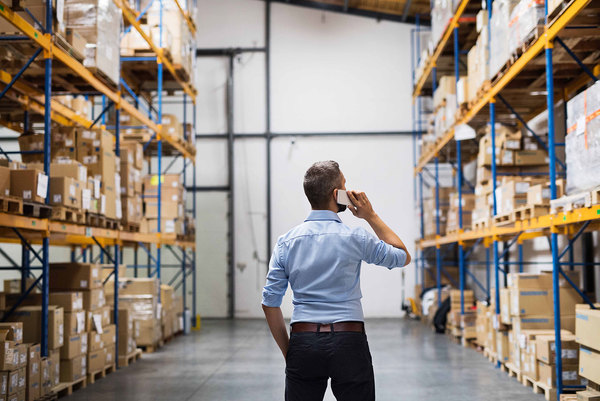
Consumers have high expectations when they shop online. As a result, they often choose one-day delivery. In 2017, an Amazon customer was very impressed when their order was delivered in less than 15 minutes. Today, consumers expect even more from delivery services. Manufacturers must therefore simplify their warehouse logistics. Jonathan Wilkins, marketing director of obsolete industrial parts supplier EU Automation, explains here how manufacturers can invest in automation to improve their warehouse logistics.
The UK Cards Association found that British shoppers spent around 154 billion pounds sterling on online purchases in 2016. Companies do not need to deliver all of these products in 15 minutes, but they must be able to offer fast delivery to remain competitive. Rapid technological advances make it possible to improve services throughout the supply chain and increase the productivity of manufacturing sites. Manufacturers are investing in this equipment to meet the growing demand from consumers who want more personalized products. Consumers expect more from the products themselves, but also from the services, particularly delivery. Many online shops now offer one-day delivery and, sometimes, even shorter lead times. Warehouse logistics managers must consider new methods to meet demand. The shorter the time between purchase and delivery, the more satisfied the customer.
Added value
When warehouse managers look to introduce more technology, they must choose it so that it improves efficiency, generates savings and adds value to their business. For example, warehouse managers can install a wireless network, as many processes use this technology. However, if they do not use connected devices, such as smart glasses, it will bring no added value to their business. Warehouses are also full of products. Manufacturers must therefore be careful and make sure that it is easy to maneuver on site and to use the technology.
Machines helping humans
With everything that goes on in a warehouse, people are at risk of injury when handling heavy goods, picking items from high shelves and working close to large infrastructure. Some of the technologies used in warehouses will change the way humans interact with packaging. For example, automated guided vehicles (AGVs) can carry heavy loads that humans could not handle. This allows people to focus on more creative tasks.
Wearable technologies are also changing the way employees can do their work in the warehouse. Smart glasses were not a hit with the general public, but today employees wear them to receive information about the tasks to be carried out, enabling them to complete them faster and more accurately. Smart glasses display information in front of employees' eyes, leaving their hands free to do the work quickly and efficiently.
Smart tracking
As more products enter the warehouse, plant managers increasingly need to ensure that they can accurately track each product on its journey to the customer. Radio-frequency identification (RFID) tags are not a new technology, but introducing them into the supply chain helps improve shipping services. Employees will have real-time data telling them the exact location of a product at any moment. Some companies are also turning to more advanced technologies, such as drones, to make faster deliveries. Technology may not be able to reduce delivery times to 15 minutes for all customers, but it will make it possible to streamline warehouse processes in order to optimize deliveries for the fast-growing consumer market.
