












Ultralife Corporation launches cells and batteries for industrial robots
 InfoWeb Marketplace · Editorial team
Published on 26 November 2018 · 3 min read
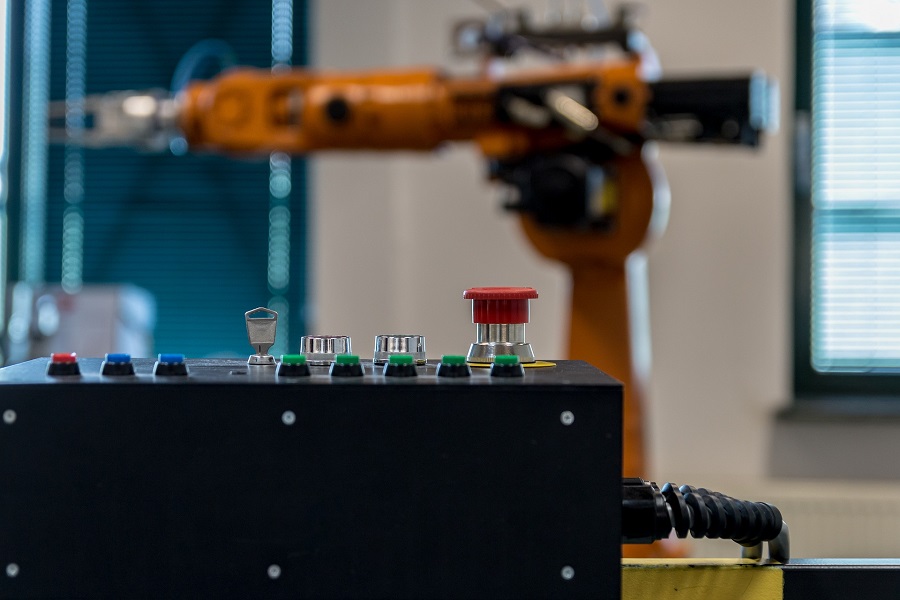
One of the main reasons for using an industrial robot to automate a process is the improvement in quality that comes with greater reliability and precision. But for robots to be truly safe and reliable, engineers must make sure they have a proper power supply. Here, Michele Windsor, global marketing director at Ultralife Corporation, a robot battery specialist, explains the impact of poor battery design and integration on industrial robots.
In a survey conducted by the scientific journal Science Robotics, researchers revealed that power and energy sources are the most challenging area of robotics research. With a multitude of potential applications, they are particularly important for robots used outside the confines of a cage, not connected to a power outlet and working alongside human employees.
Automated guided vehicles, for example, such as Omron LD self-guided intelligent vehicles, and autonomous mobile robots such as Kuka's KMR have become commonplace at trade shows and in industry alike. And because, unlike traditional industrial robots, they are not constantly connected to a power source, their needs are far more complex.
The research report goes on to state: ?Beyond the commercial technologies currently available, such as lead-acid, nickel-metal hydride and lithium-ion batteries, intensive research has been carried out on the development of next-generation technologies such as fuel cells and supercapacitors.?
Total loss
If a robot (whether collaborative, mobile or traditional) loses all power in the middle of a task, the effect can be devastating. For sectors such as food, beverages or pharmaceuticals, downtime can mean lost product and lost profits. In the medical sector, a sudden loss of power in robots can force surgeons to operate manually, resulting in a loss of precision and increased risk. But the most likely outcome is the outright cancellation of the operation.
In addition, a loss of power can cause the robot to lose its calibration and reference values. Calibration establishes the robot's kinematic structure parameters, such as the position of the joints and of the end-effector point, and the length of the joints.
Vital home position
The robot's home position is a crucial piece of data in the configuration process, as it tells the machine which position it must return to when it pauses. The robot's battery is responsible for storing the position of each axis. Without this position, all trajectories are offset, leading to inaccurate actions that risk damaging equipment or even injuring nearby operators.
If the battery fails during the process, the operator must reprogram the robot's home position before restarting the application. Re-teaching can take a considerable amount of time, as all axes must be correctly aligned, resulting in even longer production downtime.
To avoid the need to reprogram and retrain the robot, operators must make sure it returns to its home position when it stops. Consequently, if the battery is inoperative at start-up, the robot is already in its home position.
Power requirements
As robots become more and more intuitive, their power requirements are growing. To perform more complex tasks, they are fitted with sensors that detect variations in light, sound, temperature and distance. Each of these sensors places an additional demand on the power supply, and a more efficient solution may be needed.
When you look at the different power options for your robot, you will find there are many, but Li-Ion (lithium-ion), Li-Poly (lithium polymer) and NiMH (nickel-metal hydride) solutions are generally considered the best suited to power-hungry robots.
Ultralife Corporation has created a range of non-rechargeable primary lithium thionyl chloride and lithium manganese dioxide cells and batteries to meet these long-term needs. As with all batteries, regular testing is absolutely essential to make sure they will not fail unexpectedly.
Although industrial robots continue to improve productivity, competitiveness and overall process automation, if they are not properly powered, manufacturers may face additional problems. When a design engineer or system integrator starts work on a new robot project, it may be useful to think from the outset about the type of power supply required, to make sure the end user will have exactly what they need.