












Watson-Marlow optimizes a water treatment plant in Minnesota
 InfoWeb Marketplace · Editorial team
Published on 31 May 2019 · 3 min read
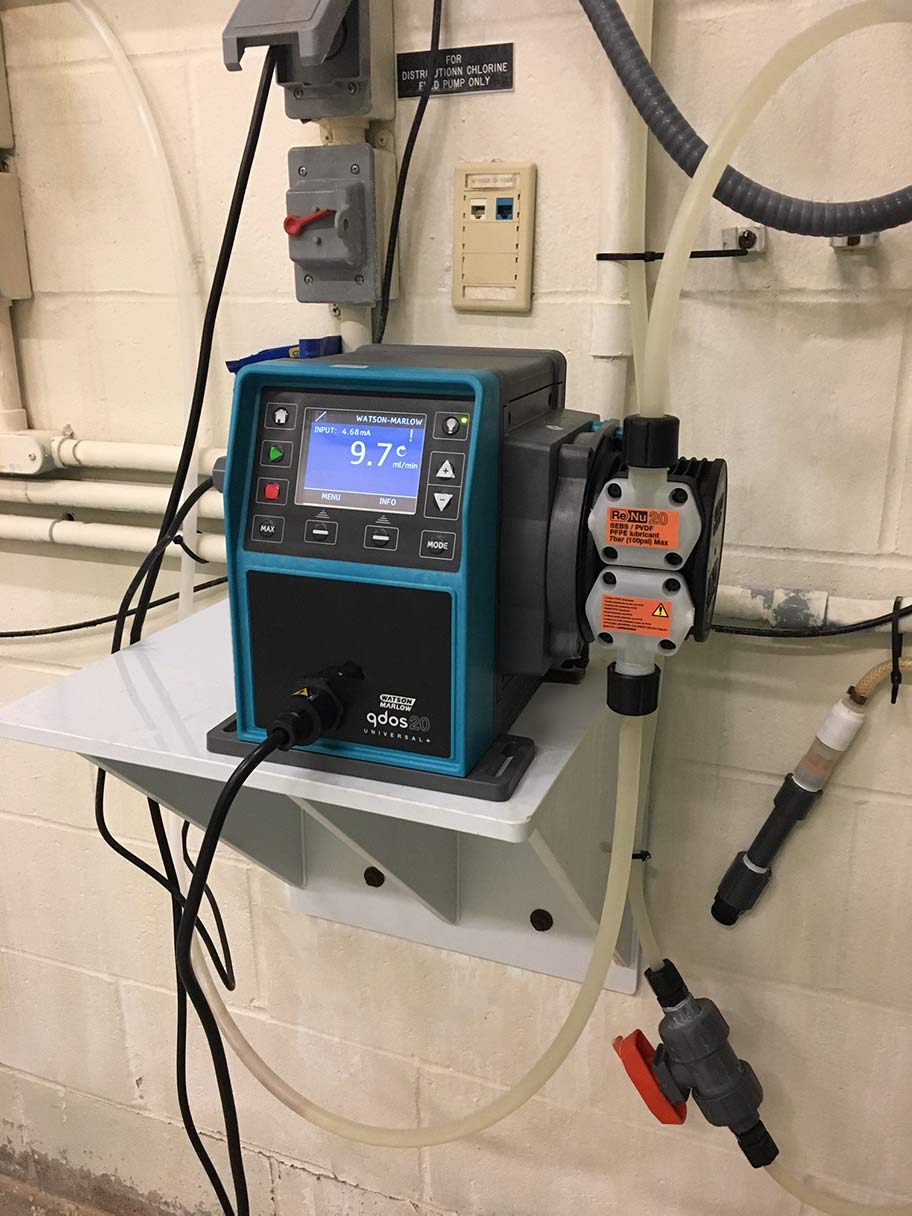
A US water treatment plant turned to Watson-Marlow Fluid Technology Group (WMFTG) when it needed a new pump to transfer sodium hypochlorite under high pressure in its post-chlorination cycle. The diaphragm metering pump previously used had significant degassing problems, causing vapor locks and forced shutdowns. After replacing the diaphragm pump with a new Qdos 20 peristaltic pump specially designed for high-pressure applications, the plant significantly reduced its downtime. At the same time, the fluid recovery function made it possible to avoid any chemical spillage when the process line was replaced.
Located in Carver County, in the state of Minnesota, the city of Victoria has approximately 8 800 inhabitants. The drinking water supplied to residents comes from three aquifer wells. About ten years ago, a treatment plant was built to deal with the presence of iron and manganese in the water. Several chemicals were introduced into the filtration, clarification and distribution process, including fluoride, sodium hypochlorite, polyphosphate and sodium permanganate.
Degassing problems
The diaphragm pump used to dose sodium hypochlorite at the post-chlorination stage had significant problems due to degassing. According to Clark Corbett, sales engineer at Vessco Inc, the supplier of chemical feed equipment to the city of Victoria, this problem is frequently encountered in this type of application.
?The original diaphragm pump tended to lose its prime and degas, to the point where bubbles formed in the diaphragm or vapor locks blocked it, which stopped it from operating,? he explains. According to Mr. Corbett, very few pumps met the replacement criteria and the requirements of this application, which has a low flow rate (from 9 to 13,5 liters per hour) but high pressure (up to 7 bar at discharge). He nevertheless suggested a brand-new technology to the plant: the Watson Marlow Qdos 20 peristaltic metering pump.
The fluid path of peristaltic pumps has no valves, seals or glands, which frees these models from any problem related to air entrainment or to the abrasive or corrosive nature of fluids such as those encountered in water treatment. And, very importantly, the tube in the Qdos 20 ReNu pump head is made of a material specially formulated for the flow of sodium hypochlorite under high pressure.
A one-year trial
The Victoria plant tested the Qdos 20 model for more than a year and had to replace the ReNu pump head only once during that period. Operating between 4,8 and 7 bar and controlled by an input signal of 4 to 20 mA, the Qdos 20 pump significantly reduced the plant's maintenance needs. As a result, the plant is currently replacing the trial model with a production unit.
The WMFTG Qdos 20 pump is designed to reduce maintenance requirements. The ReNu pump head, for example, incorporates a leak detector that stops the pump to protect it in the event of a failure of any kind. In addition, if the tube fails, operators simply need to replace the pump head quickly and safely, without tools or special skills. The new pump was developed for optimized performance with sodium hypochlorite up to 7 bar, at flow rates of 0,005 to 20 liters per hour. It is particularly well suited to well applications in small water treatment plants, where chemical injection into the line often takes place at high pressure.
Flexibility for small plants
?Water applications depend on the reliable supply of chemicals, and it is particularly important to ensure the proper flow of sodium hypochlorite,? explains Mr. Corbett. ?The Qdos 20 pump meets the needs of small plants that need greater flexibility. Small towns generally have limited staff. With this technology, only the pump head needs to be replaced, which is a low-cost, disposable part.?
Another feature appreciated by the plant is that the process line can be replaced without chemical spillage from the tubes, which is particularly important given the highly corrosive nature of sodium hypochlorite in this type of application.
