


Editorial team
 InfoWeb Marketplace · Editorial team
Published on 24 August 2021 · 4 min read
Collaboration within the industrial ecosystem with EPLAN
InfoWeb Marketplace · Editorial teamPublished on 24 August 2021 · 4 min read
Targeted collaboration between all systems and parties makes it possible to resolve compatibility bottlenecks when processing and transferring documentation during the development of industrial machines and installations. The data created during the engineering process must be shared with all stakeholders. The main objective is to build a network between machine manufacturers and system integrators, component manufacturers, and the operator of the machine or industrial installation.
How can this collaboration between the different participants in the process be defined today? During the planning phase, the characteristics of the desired machine or industrial installation are described. If the company has particular requirements regarding suppliers, these are also detailed and passed on to the operator, who takes them into account when designing the machine or installation. The planning phase is followed by the pre-planning process. Additional information such as equipment, version lists in Excel format, specifications in Word, or pre-planning tools such as EPLAN Preplanning is taken into account and, in turn, used by those responsible for basic engineering. For more complex production lines, this task is generally entrusted to a system integrator, who is also responsible for detailed engineering and for creating the electrical and fluid schematics.
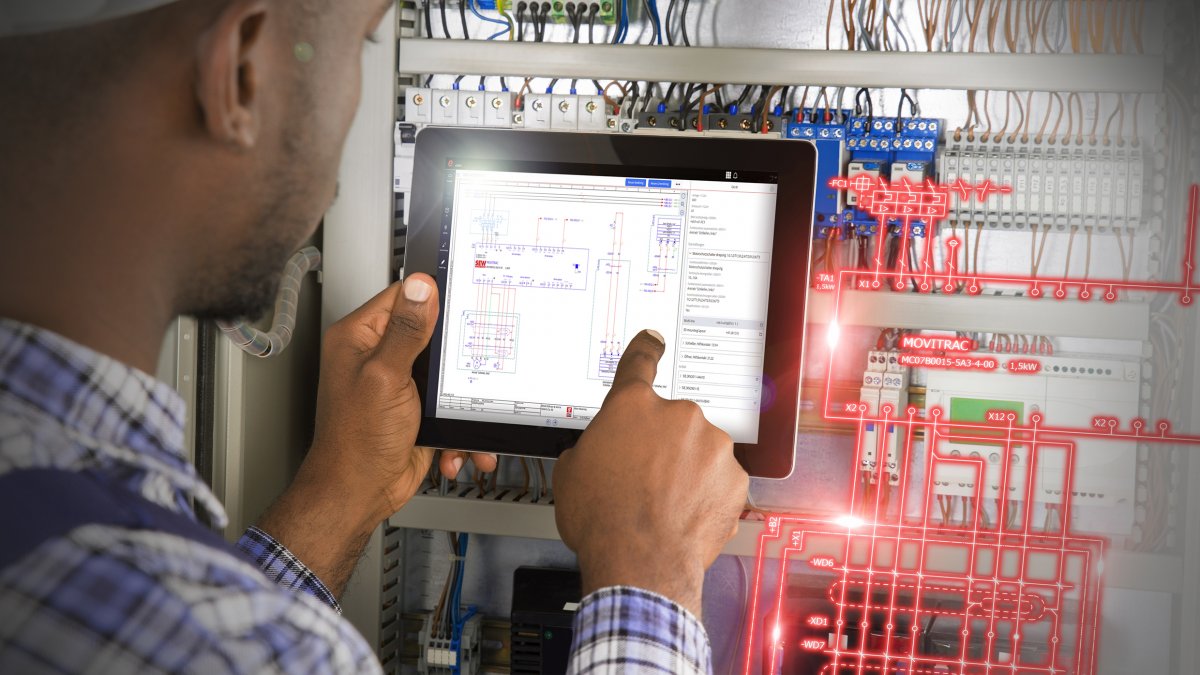
The project created via the EPLAN platform, using EPLAN Electric P8 or EPLAN Fluid, for example, is transferred to the control cabinet manufacturer. The manufacturer creates the virtual prototype of the switchgear, which takes the form of an assembly 3D of the control cabinet in EPLAN Pro Panel. The control cabinet is then manufactured, validated, and commissioned by the operator. Once the switchgear has been delivered, the control cabinet manufacturer's work is complete. The company returns the EPLAN project, enriched with additional data, to the machine manufacturer or system integrator, who then commissions the machine or installation using the final project data. The project is then made available to the operator. The operator can access up-to-date documentation via EPLAN eVIEW when servicing or maintenance is required. The operator can also document changes digitally using the annotation function if needed.
This process describes the day-to-day work in this industrial automation ecosystem. The difficulty lies in the fact that the data of an automation project is created and added at different stages of the value chain. The various project participants often use inconsistent data, which lengthens lead times and increases the risk of errors. For example, the drive power of a motor may be changed at a later stage of the project without this change being taken into account when the machine or industrial installation is commissioned. In such a case, the documentation is not up to date.
This is where EPLAN comes in: the solutions of the EPLAN platform 2022, combined with the new cloud service EPLAN eMANAGE, create a network between machine manufacturers and system integrators, control cabinet and component manufacturers, and operators of machines and industrial installations. EPLAN CEO Sebastian Seitz explains: ?We bring companies closer to their customers and suppliers via the cloud, to make data sharing easier and more secure.
By using the EPLAN project as the central digital model of an automation solution, all processes have the data they need. It is, in a way, a ?data container’ fed by the solutions of the EPLAN platform. It provides added value for the digital collaboration of all participants, through secure data transfer and central access to the EPLAN project.? Another new feature: the cloud connection via EPLAN ePULSE also considerably facilitates mobile work in design and engineering.
With the new EPLAN eMANAGE tool, projects can easily be transferred to the cloud to be shared and managed there. The worlds of on-premises software and the cloud are thus brought closer together. Access rights are clear thanks to role management, which ensures data security and offers many options for project access. Users of EPLAN Electric P8 and EPLAN Pro Panel can easily transfer their projects to the cloud and re-import them into the EPLAN platform for further processing.
This system eliminates the need to send project data by e-mail or via an FTP server, an extremely tedious task. Thanks to this clear, central availability in the cloud, all project participants can quickly find the content they want. With EPLAN eVIEW, all changes made to a project are centralized and accessible. The benefits are obvious: the documentation is constantly up to date throughout the project's lifetime, and even after commissioning and during maintenance operations. Equipment data is one of the essential components. It is available via the EPLAN Data Portal. Sebastian Seitz explains: ?The quality and scope of data are of paramount importance. In this area, considerable progress is being made thanks to the EPLAN data standard.? Comprehensive, integrated digital data helps speed up projects. Not to mention that their consistency is preserved and that their transfer is carried out securely.
The industrial automation ecosystem
How can this collaboration between the different participants in the process be defined today? During the planning phase, the characteristics of the desired machine or industrial installation are described. If the company has particular requirements regarding suppliers, these are also detailed and passed on to the operator, who takes them into account when designing the machine or installation. The planning phase is followed by the pre-planning process. Additional information such as equipment, version lists in Excel format, specifications in Word, or pre-planning tools such as EPLAN Preplanning is taken into account and, in turn, used by those responsible for basic engineering. For more complex production lines, this task is generally entrusted to a system integrator, who is also responsible for detailed engineering and for creating the electrical and fluid schematics.
Enriched data in the EPLAN project
The project created via the EPLAN platform, using EPLAN Electric P8 or EPLAN Fluid, for example, is transferred to the control cabinet manufacturer. The manufacturer creates the virtual prototype of the switchgear, which takes the form of an assembly 3D of the control cabinet in EPLAN Pro Panel. The control cabinet is then manufactured, validated, and commissioned by the operator. Once the switchgear has been delivered, the control cabinet manufacturer's work is complete. The company returns the EPLAN project, enriched with additional data, to the machine manufacturer or system integrator, who then commissions the machine or installation using the final project data. The project is then made available to the operator. The operator can access up-to-date documentation via EPLAN eVIEW when servicing or maintenance is required. The operator can also document changes digitally using the annotation function if needed.
This process describes the day-to-day work in this industrial automation ecosystem. The difficulty lies in the fact that the data of an automation project is created and added at different stages of the value chain. The various project participants often use inconsistent data, which lengthens lead times and increases the risk of errors. For example, the drive power of a motor may be changed at a later stage of the project without this change being taken into account when the machine or industrial installation is commissioned. In such a case, the documentation is not up to date.
A ?data container? as a central source of information
This is where EPLAN comes in: the solutions of the EPLAN platform 2022, combined with the new cloud service EPLAN eMANAGE, create a network between machine manufacturers and system integrators, control cabinet and component manufacturers, and operators of machines and industrial installations. EPLAN CEO Sebastian Seitz explains: ?We bring companies closer to their customers and suppliers via the cloud, to make data sharing easier and more secure.
By using the EPLAN project as the central digital model of an automation solution, all processes have the data they need. It is, in a way, a ?data container’ fed by the solutions of the EPLAN platform. It provides added value for the digital collaboration of all participants, through secure data transfer and central access to the EPLAN project.? Another new feature: the cloud connection via EPLAN ePULSE also considerably facilitates mobile work in design and engineering.
Easier project collaboration via the cloud
With the new EPLAN eMANAGE tool, projects can easily be transferred to the cloud to be shared and managed there. The worlds of on-premises software and the cloud are thus brought closer together. Access rights are clear thanks to role management, which ensures data security and offers many options for project access. Users of EPLAN Electric P8 and EPLAN Pro Panel can easily transfer their projects to the cloud and re-import them into the EPLAN platform for further processing.
This system eliminates the need to send project data by e-mail or via an FTP server, an extremely tedious task. Thanks to this clear, central availability in the cloud, all project participants can quickly find the content they want. With EPLAN eVIEW, all changes made to a project are centralized and accessible. The benefits are obvious: the documentation is constantly up to date throughout the project's lifetime, and even after commissioning and during maintenance operations. Equipment data is one of the essential components. It is available via the EPLAN Data Portal. Sebastian Seitz explains: ?The quality and scope of data are of paramount importance. In this area, considerable progress is being made thanks to the EPLAN data standard.? Comprehensive, integrated digital data helps speed up projects. Not to mention that their consistency is preserved and that their transfer is carried out securely.