



Editorial team
 InfoWeb Marketplace · Editorial team
Published on 20 August 2021 · 3 min read
How Does VoIP Simply Optimize Processes in Industry?
InfoWeb Marketplace · Editorial teamPublished on 20 August 2021 · 3 min read
Industry 4.0, digitalization, remote control, predictive maintenance: industry is one of the sectors where optimizing infrastructure and the use of machinery is essential to remain competitive. Agility, sustainability, AI and automation are the watchwords for the future of industry.
Some industrial companies have already recognized the potential of the available work equipment. Despite using state-of-the-art IP infrastructures, they benefit only marginally from the integration possibilities between information and communication technologies and telecommunications. This is an unprecedented opportunity, which Snom, the specialist in professional IP solutions, illustrates with a few examples.
A telephone system based on the SIP standard and integrated into the information system (ERP/CRM), to which video door phones and IP terminals with color screens are connected, makes it possible to monitor goods in and goods out in real time (even with video recording). Simply pressing a key on the IP phone opens the right door or the loading dock gate, and warehouse staff are immediately informed of the imminent arrival of goods via IP paging systems or DECT phones. The major advantage: all employees can initiate this process without having to leave their workplace!
More importantly, it is possible to change the processing status of a product, partly created manually, using a button on the phone, thereby automatically notifying the next colleague in the product's production sequence and feeding this information into the production management system.
All technicians can be informed simultaneously, at the press of a button, of malfunctions or other events affecting production in the systems, by means of a group call. Depending on the shift rotation, the call is automatically forwarded to all available internal and external technicians, without the need to make the effort of phoning individual people, who may be on a break or may not be available. In companies where a significant number of employees habitually move around the company premises or have no fixed workplace, the use of modern IP DECT terminals not only guarantees that employees can be reached at any time and anywhere on the company site, but also ensures their safety. The programmable alarm button on Snom phones and, in particular, the lone worker protection (LWP) feature of the Snom M85 industrial wireless phone with integrated position sensors are an example: if the device detects a loss of verticality or abnormal immobility, an emergency message is sent according to the device's programming.
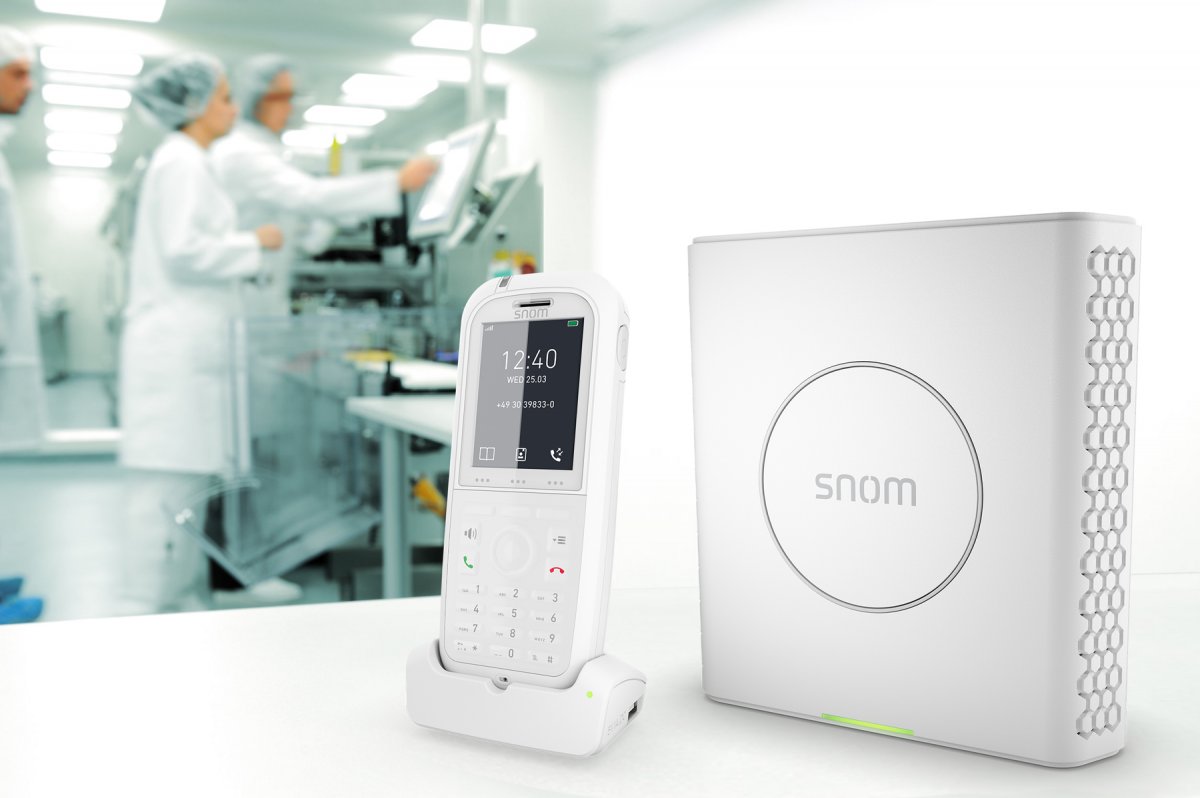
When using wireless IP phones, they must meet the high standards of industrial organizations and, for example, have an antibacterial, easy-to-disinfect casing (food or pharmaceutical industry) or be military-grade in terms of resistance to drops, dust and moisture (heavy industry and construction). And that is not all, because exceptionally good DECT signal range beyond fire doors and reinforced concrete walls is also essential. With its single-cell and multi-cell solution for indoor and outdoor use, Snom creates optimal conditions here, even in the most unfavorable architectural conditions.
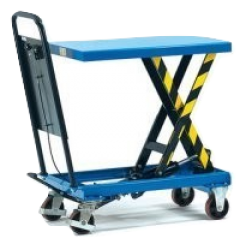
One of the latest developments in the field of location tracking is beacons and their tags. They enable specific indoor navigation (down to 1 m), which makes them perfectly suited to inventory and warehouse management, theft protection or the location of mobile work equipment. The solution developed by Snom for these application scenarios involves beacons distributed across the industrial site or in warehouses, which send a constant signal to compatible IP DECT or desk phones via the manufacturer's multi-cell DECT solution. The tags are attached to individual devices such as forklifts or pallet trucks. Thanks to the constant exchange between beacons and tags, as well as between beacons and phones, the position of a tag can be determined with greater accuracy and tracked live.
Some industrial companies have already recognized the potential of the available work equipment. Despite using state-of-the-art IP infrastructures, they benefit only marginally from the integration possibilities between information and communication technologies and telecommunications. This is an unprecedented opportunity, which Snom, the specialist in professional IP solutions, illustrates with a few examples.
Automatic recording of production status and of the delivery or shipping of goods by telephone
A telephone system based on the SIP standard and integrated into the information system (ERP/CRM), to which video door phones and IP terminals with color screens are connected, makes it possible to monitor goods in and goods out in real time (even with video recording). Simply pressing a key on the IP phone opens the right door or the loading dock gate, and warehouse staff are immediately informed of the imminent arrival of goods via IP paging systems or DECT phones. The major advantage: all employees can initiate this process without having to leave their workplace!
More importantly, it is possible to change the processing status of a product, partly created manually, using a button on the phone, thereby automatically notifying the next colleague in the product's production sequence and feeding this information into the production management system.
Operational continuity and workplace safety
All technicians can be informed simultaneously, at the press of a button, of malfunctions or other events affecting production in the systems, by means of a group call. Depending on the shift rotation, the call is automatically forwarded to all available internal and external technicians, without the need to make the effort of phoning individual people, who may be on a break or may not be available. In companies where a significant number of employees habitually move around the company premises or have no fixed workplace, the use of modern IP DECT terminals not only guarantees that employees can be reached at any time and anywhere on the company site, but also ensures their safety. The programmable alarm button on Snom phones and, in particular, the lone worker protection (LWP) feature of the Snom M85 industrial wireless phone with integrated position sensors are an example: if the device detects a loss of verticality or abnormal immobility, an emergency message is sent according to the device's programming.
When using wireless IP phones, they must meet the high standards of industrial organizations and, for example, have an antibacterial, easy-to-disinfect casing (food or pharmaceutical industry) or be military-grade in terms of resistance to drops, dust and moisture (heavy industry and construction). And that is not all, because exceptionally good DECT signal range beyond fire doors and reinforced concrete walls is also essential. With its single-cell and multi-cell solution for indoor and outdoor use, Snom creates optimal conditions here, even in the most unfavorable architectural conditions.
Where is the forklift?
One of the latest developments in the field of location tracking is beacons and their tags. They enable specific indoor navigation (down to 1 m), which makes them perfectly suited to inventory and warehouse management, theft protection or the location of mobile work equipment. The solution developed by Snom for these application scenarios involves beacons distributed across the industrial site or in warehouses, which send a constant signal to compatible IP DECT or desk phones via the manufacturer's multi-cell DECT solution. The tags are attached to individual devices such as forklifts or pallet trucks. Thanks to the constant exchange between beacons and tags, as well as between beacons and phones, the position of a tag can be determined with greater accuracy and tracked live.