
Machine Learning in Intralogistics by TGW
 InfoWeb Marketplace · Editorial team
Published on 29 September 2020 · 3 min read
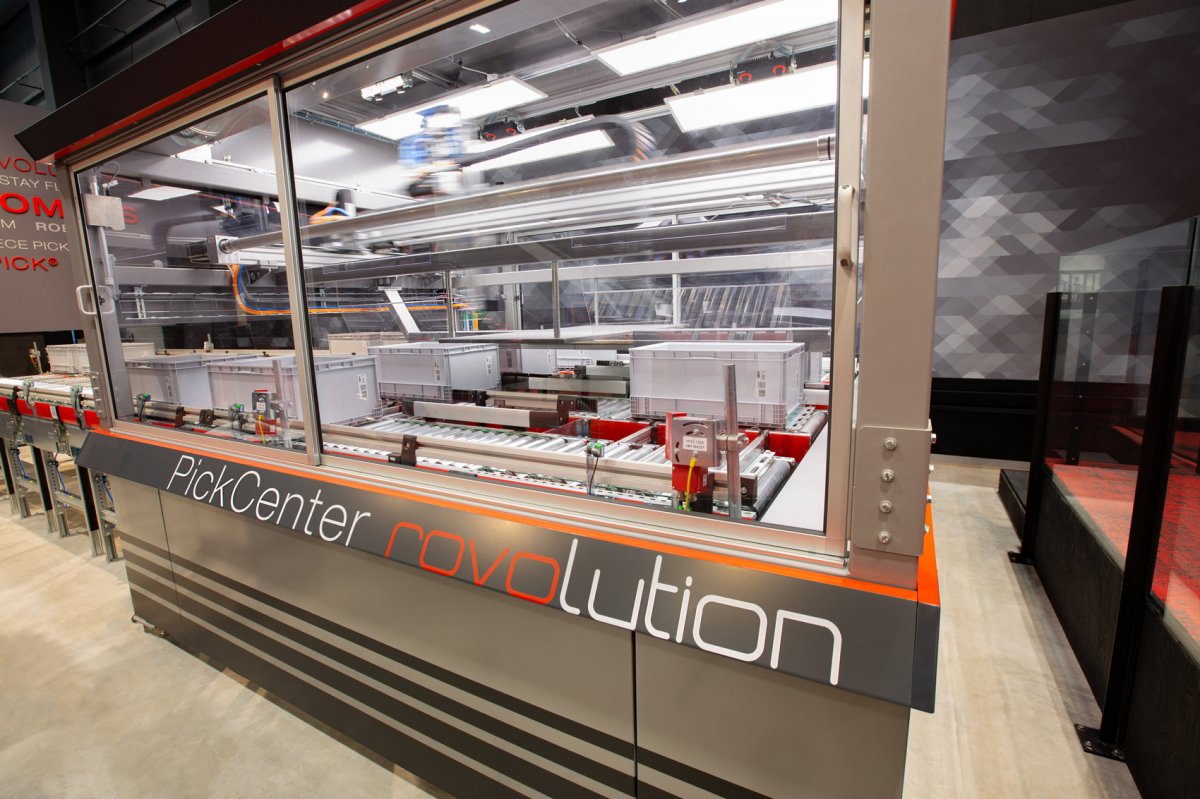
Intralogistics, like a growing number of economic sectors, is integrating artificial intelligence and machine learning. TGW has, for example, developed Rovolution, the self-learning order picking robot. In our interview, Maximilian Beinhofer, Head of Cognitive Systems Development at TGW, explains the strengths offered by the system with its many rewards and how artificial intelligence can help optimize the order picking center of tomorrow.
Mr. Beinhofer, what exactly is machine learning?
The term machine learning covers about 95 percent of all applications involving artificial intelligence. It is a generic concept for acquiring knowledge from experience. It is based on algorithms that do not follow a rule programmed in an immutable way but rely on a predefined basic structure. These algorithms then keep learning in order to recognize patterns and make predictions.
Machine learning is therefore based on experience. Using historical data, the system learns to handle new, as yet unknown data autonomously. The continuously refined algorithm learns and can thus deal with new situations autonomously and dynamically. This is the key to greater efficiency in intralogistics, for example in automated order picking.
What are the advantages of such a technology?
Artificial intelligence and its various fields are a growth factor in many sectors. Throughout the supply chain, a great deal of information lies dormant that can contribute significantly to designing processes more efficiently. We are talking here about the performance of a system as a whole as well as of its individual components. By integrating machine learning, companies benefit from more efficient procedures. For example, it makes it possible to pick and ship customers' orders without errors and as quickly as possible.
In which areas do TGW employees work on artificial intelligence?
The range of applications for artificial intelligence is very broad. We want to integrate it in a targeted way where the company and its customers will benefit the most. This is the case wherever patterns need to be recognized within large volumes of data and procedures and processes need to be optimized. That is why, at TGW, we integrate machine learning from three perspectives: the object, the product flow and the machine. First, learning at the object level: this may involve handling supports such as cartons or items to be picked by our Rovolution robot. The central question here is: what are the properties of this specific object and how can it be picked most efficiently?
The second perspective focuses on the product flow. Here, the challenge is as follows: how do I control my system to eliminate bottlenecks and ensure that the picking stations are evenly loaded? Finally, we look at machine learning: here, the aim is to analyze and understand the condition of each component, for example in the context of condition monitoring or predictive maintenance. In this way, downtime can be reduced by planning maintenance dates and repairs in advance.
In which areas do TGW employees integrate machine learning technologies?
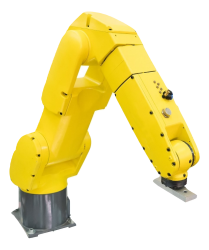
The operation of Rovolution, our self-learning order picking robot, is based on knowledge acquired in the field of machine learning. Faced with an unexpected situation, such as an item dropping at the moment it is grasped, the device reacts completely autonomously and without human intervention to correct the procedure. This allows uninterrupted work 24 hours a day out of 24. An algorithm develops, based on the data acquired, a form of understanding of situations, enabling states to be assessed and classified. The Rovolution robot uses this basis to decide entirely autonomously how to handle the item to be picked.
What are you working on at the moment?
We are currently working, among other things, on prediction models intended to allow a system to be precisely adapted to seasonal variations or to changes in customers' ordering behavior. The models recognize patterns that would not be immediately clear to a human brain. In day-to-day operations, this makes it possible to draw conclusions and make decisions much more quickly. TGW also invests in research projects and works closely with international universities.
So machine learning complements automation?
Machine learning provides answers to challenges that cannot be met with conventional automation technology. TGW brings optimal conditions here: we have more than 50 years of experience in automation and can combine our mechatronics expertise with the knowledge acquired in software and digital technology, for the benefit of our customers.