

Description
WorkNC Robot Machining
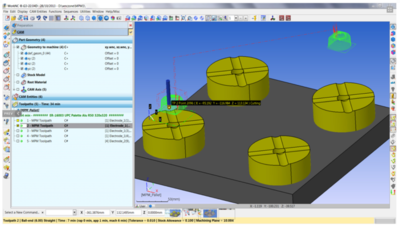
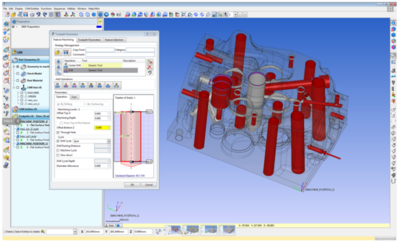
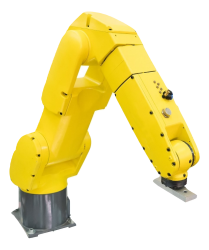
The WorkNC Robot module allows you to simulate and modify toolpaths to control all types of robots.
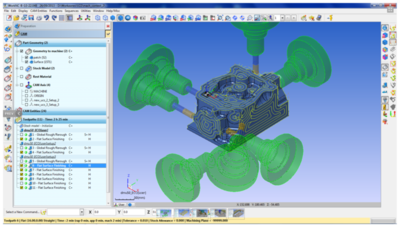
This new module was designed to manage robot cells capable of working in 15 axes. These cells can be equipped with workpiece holders and tool holders according to your needs.
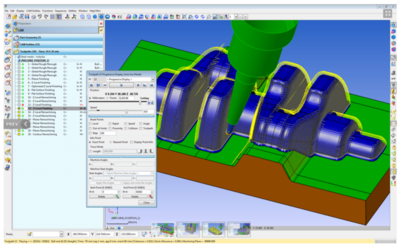
WorkNC Robot can deploy the full range of WorkNC toolpaths for machining, hardening, welding and polishing.
WorkNC functions have been designed and tested to be simple to use and to increase reliability. It detects collisions between the elements of the cell, and manages rotational limits as well as singularities.
Overview of features
Easy and reliable toolpath generation
All types of toolpaths on complex parts for all types of applications
Collision detection with the environment
Detection of out-of-range positions
Detection of singularities
Suggestion of the complementary position
Management of all robot kinematics.
Easy toolpath generation:
This module allows you to program and convert all WorkNC machining strategies.
It allows you to control a robot not only for machining but also for torch/laser welding, hardening, etc...
Simulation
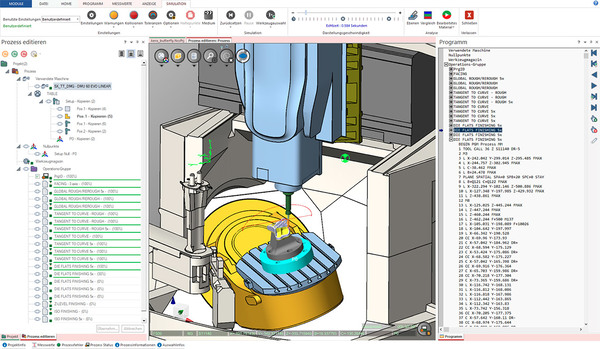
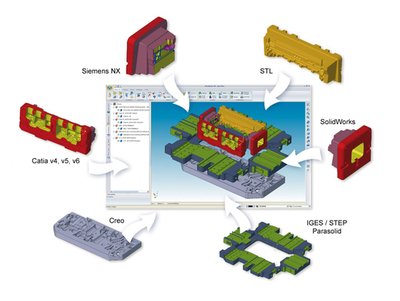
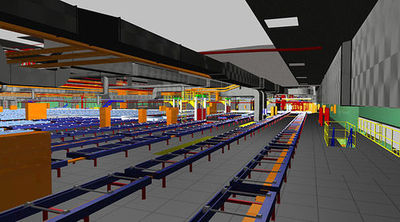
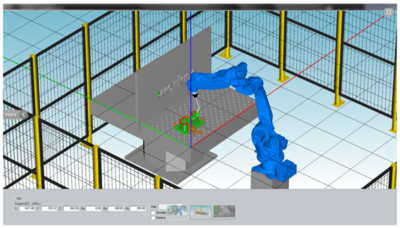
WorkNC Robot includes all the tools needed to virtualise the cell: tool magazine, rotary table, safety barriers, etc. These elements are taken into account for collision detection. (These elements can also be imported from CAD files.)
Creating and validating toolpaths in the simulation module saves considerable time compared with point-by-point programming on the robot. WorkNC Robot can generate productive toolpaths very quickly.
Simulating the toolpath trajectories makes it possible to visualise singularity points and out-of-range positions. In addition, toolpaths can be modified and complementary positions can be found automatically.
Postprocessor
WorkNC Robot generates programs in the robot's native language such as: VAL3 for Staubli.
Technical specifications
| Category | Robotics, Automation, Industrial IT |
|---|---|
| Subcategory | Industrial software |